

When the Power Goes Out, Warnings Are Not a Plan
Posted by Brian Thomas on Oct 13th 2026
A GenTent consumer safety survey shows that generator owners want to make safer choices, but warnings alone do not always give them a practical path during real outages.
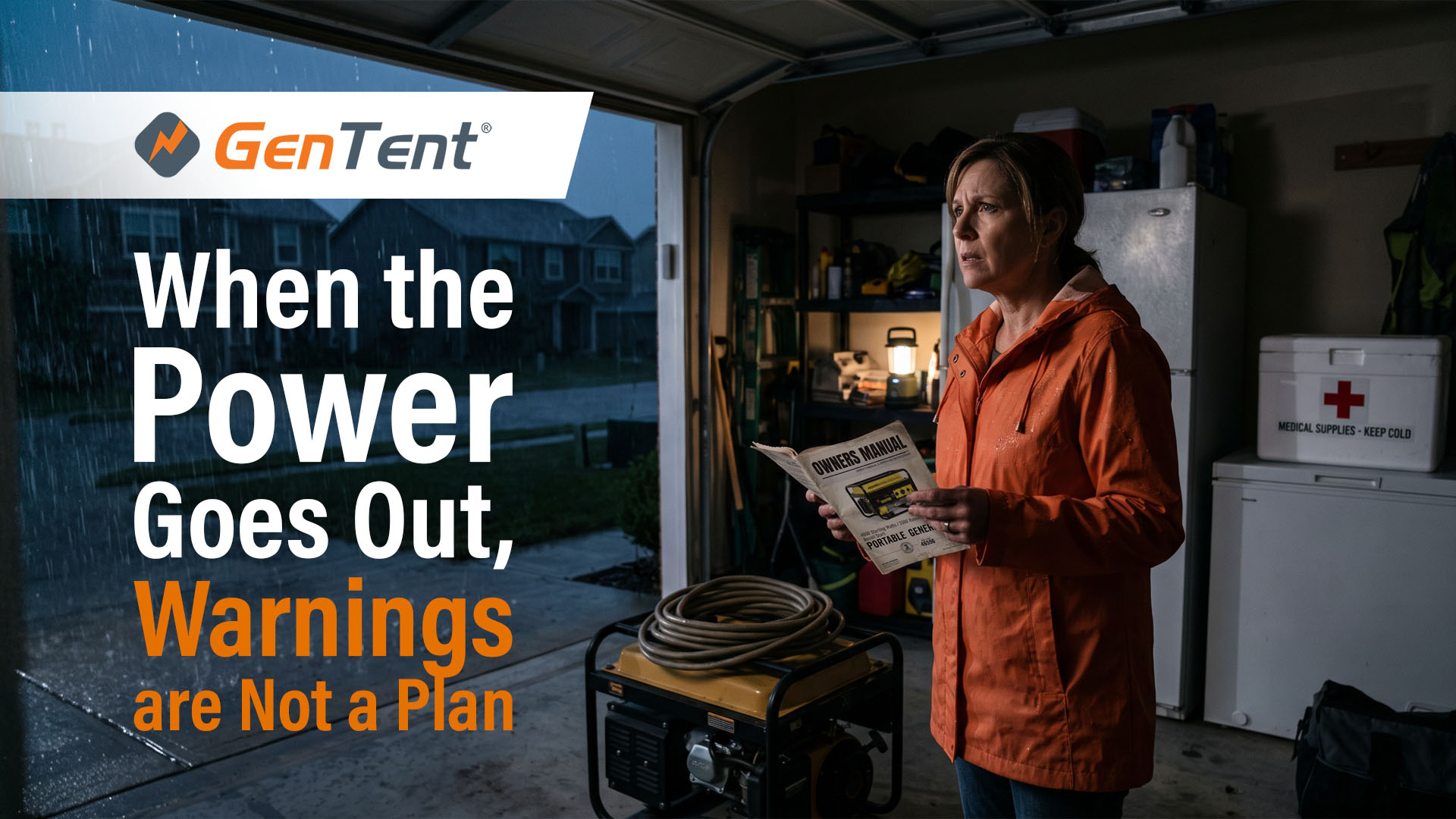
Simple question: do you own a portable generator?
If so, have you ever looked inside the manual?
Much of the portable generator safety guidance consumers see is a laundry list of what not to do, communicated through warnings.
- Do not run a generator indoors.
- Do not run it in a garage.
- Do not place it near windows, doors, or vents.
- Do not backfeed a home through a wall outlet.
- Do not expose it to rain, snow, or wet conditions without following the manufacturer’s guidance.
- Do not cover it with flammable materials or products not designed for running generator use.
Every one of those warnings matters.
Portable generators can create serious carbon monoxide, fire, electrical shock, electrocution, and burn hazards. But warnings alone can leave consumers with a difficult question during an actual outage:
What am I supposed to do instead?
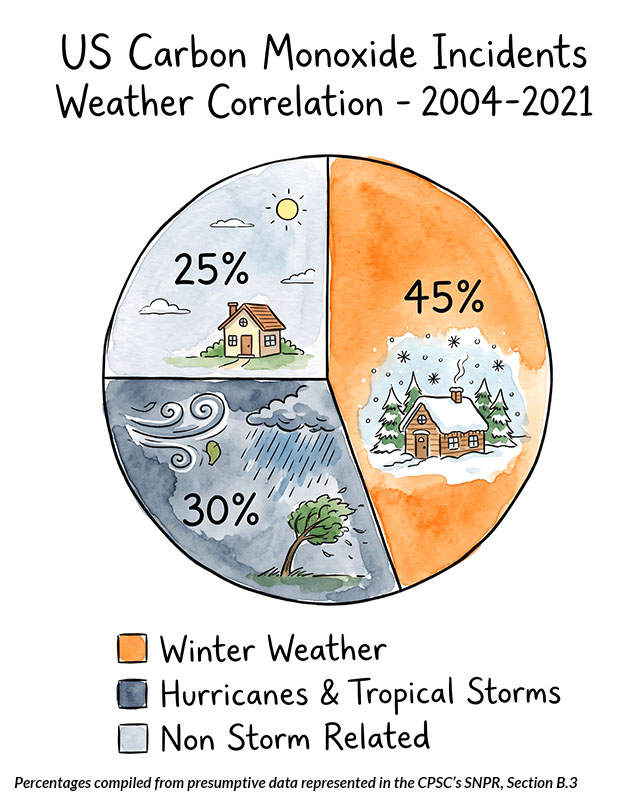
For many portable generator owners, backup power is not theoretical. It is what people turn to when storms, hurricanes, winter weather, wind events, or grid outages interrupt daily life.
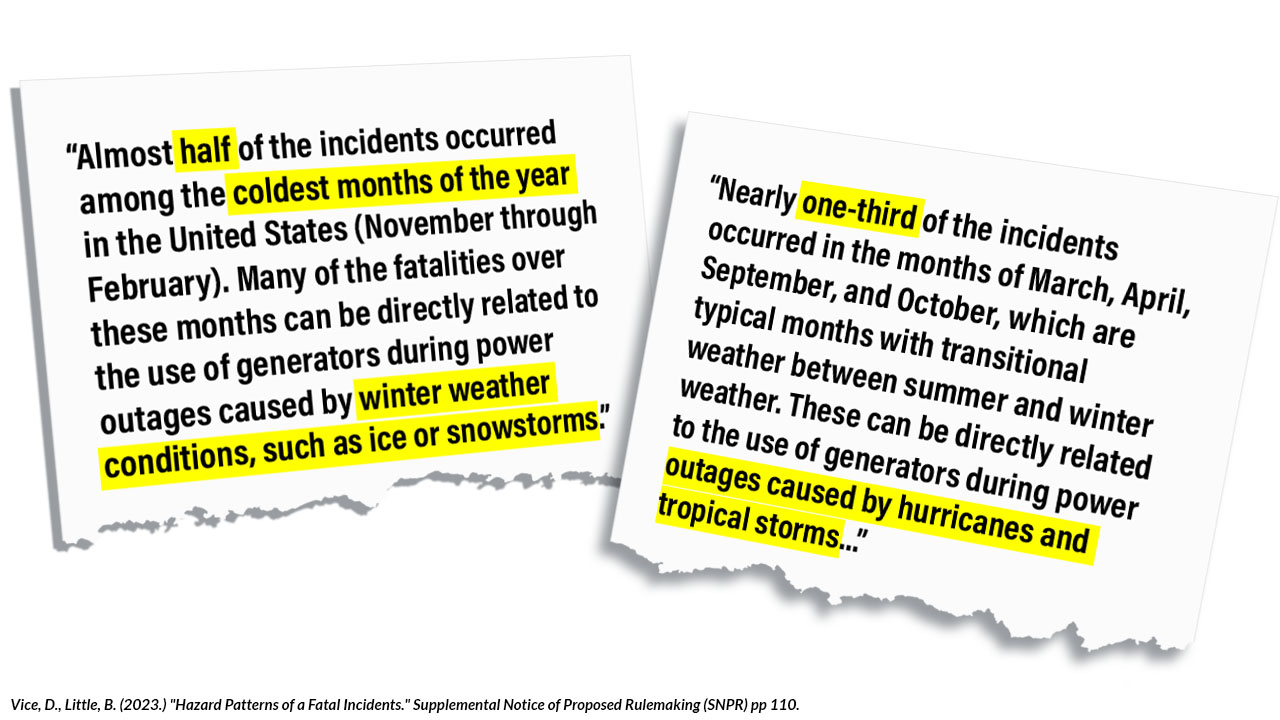
In the GenTent survey, the most common portable generator use case was emergency home backup. That matters because backup power decisions are rarely made in calm, ideal conditions. They are made when weather is moving through, the power is out, and people are trying to protect food, heat, medical needs, sump pumps, communication, or basic household power.
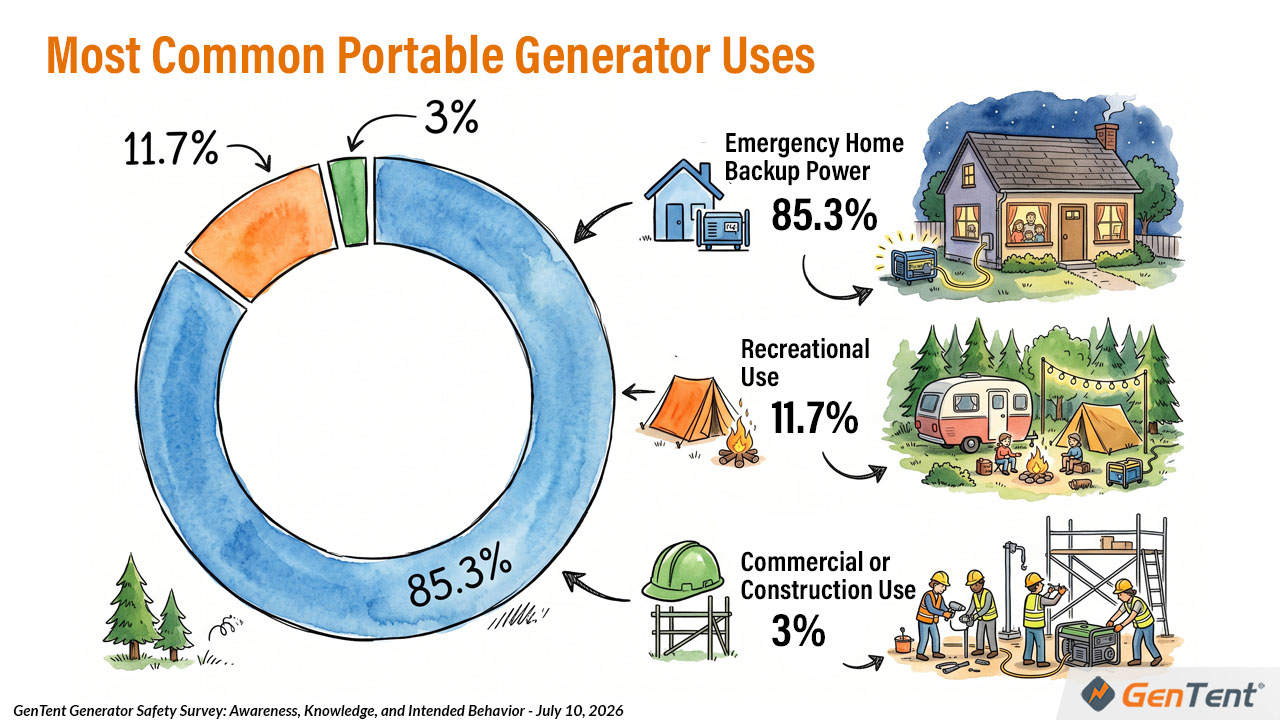
The power goes out. It is raining. Food is warming in the fridge. A sump pump, freezer, heating system, or emergency medical device needs power. The generator needs to stay outside because of carbon monoxide, but many generator instructions warn against unprotected wet-weather operation.
That is the moment when unsafe decisions happen.
A garage, porch, shed, tarp, plywood cover, or improvised shelter may feel like a practical compromise. But those choices can create new hazards, including blocked airflow, heat retention, carbon monoxide buildup, fire risk, and electrical shock hazards.
Recent consumer survey data points to a clear conclusion: consumers are not simply rejecting generator safety. Many are trying to solve a real problem with incomplete guidance, competing warnings, and pressure to act quickly when anxiety and tension are high.
About the Survey
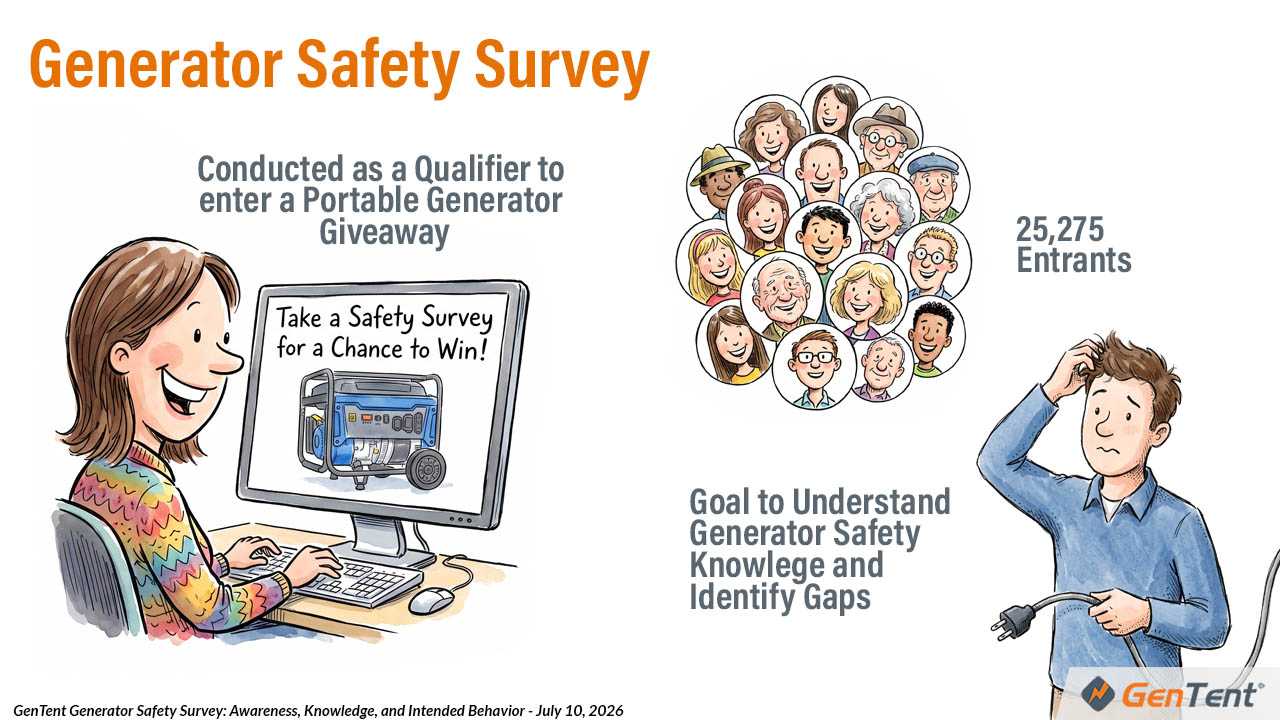
GenTent conducted a blind consumer safety research study through a social media driven campaign with 25,275 entrants. To enter the portable generator giveaway, respondents were asked to answer a series of generator safety questions honestly before receiving educational explanations tied to each topic.
The goal was not to prove that consumers are careless. The goal was to better understand what people know, what they assume, where safety gaps remain, and whether clearer education and practical safety solutions can help consumers make safer choices.
The results show a consistent pattern: consumers underestimate key risks, misunderstand what safety features can and cannot do, and struggle most when wet weather becomes part of the emergency.
CO Shutoff Helps, But Awareness Is Not Understanding
CO shutoff technology is an important advancement in portable generator safety. Standards like UL 2201 and ANSI/PGMA G300 have helped move the industry forward by addressing carbon monoxide hazard mitigation and automatic shutoff performance.
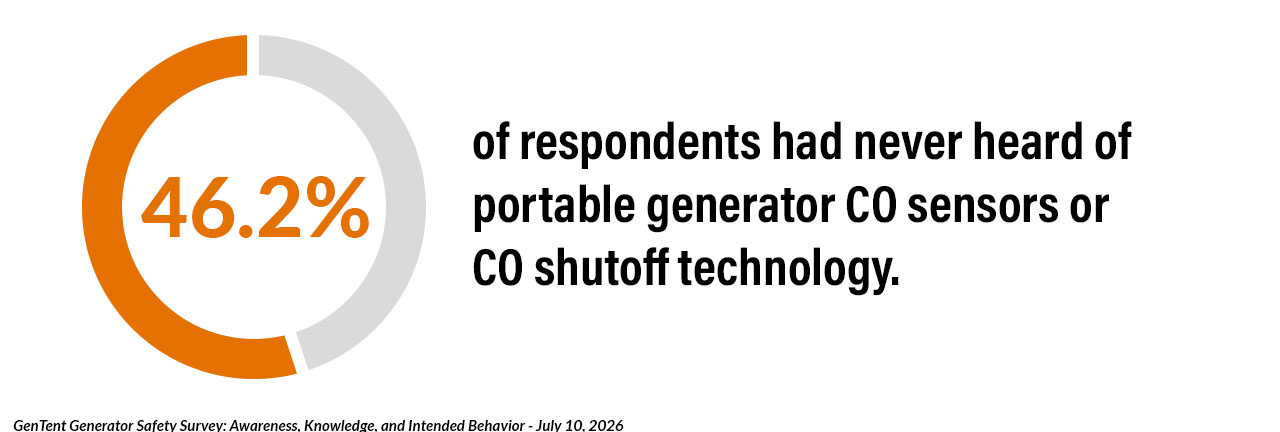
In the GenTent survey, 53.8% of respondents said they had heard of a carbon monoxide sensor or automatic shutoff feature for portable generators, while 46.2% had not. That is progress, but it is not enough.
Awareness of a safety feature does not always mean a consumer understands how to use the generator safely. A CO shutoff sensor can reduce risk, but it does not make an unsafe location safe.
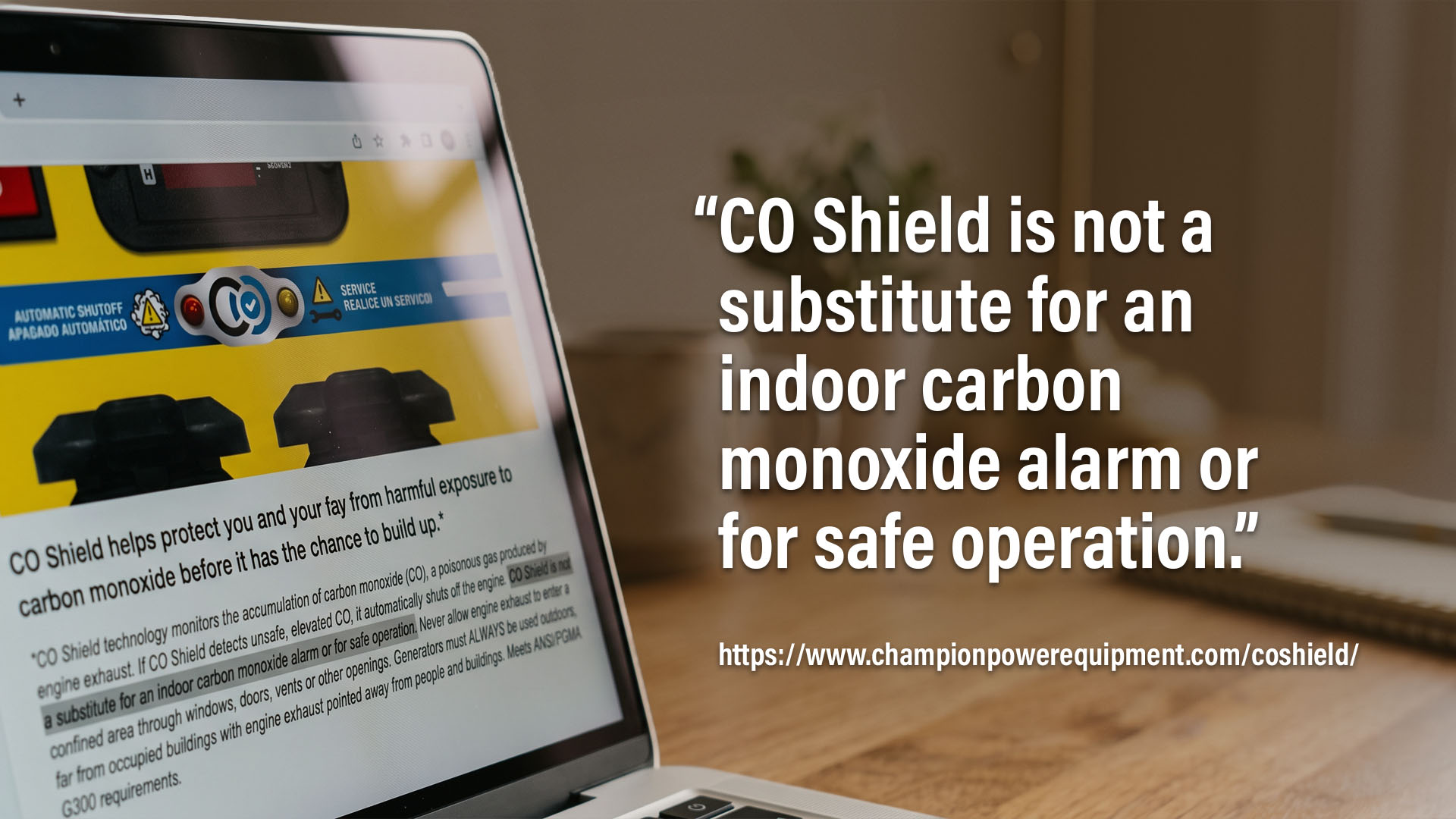
That gap is a real example of automation bias: when people over-rely on a safety feature and assume it manages more of the risk than it actually can. Champion makes a similar point in its CO Shield guidance, noting that CO Shield is not a substitute for safe operation or an indoor CO alarm.
The survey showed signs of that problem. When respondents were asked where they would feel safe operating a generator equipped with a CO sensor, only 31.2% selected outside away from structures without also choosing an unsafe location. The remaining 68.8% selected at least one enclosed or partially enclosed location.
CO shutoff is part of the safety plan. It is not the plan.
The 20-Foot Rule Is Being Heard. Now We Need to Make It Practical.
The 20-foot distance safety message is gaining wider adoption. Safety agencies, emergency management voices, and generator manufacturers are increasingly aligned around the same core guidance: operate portable generators outdoors, at least 20 feet away, with exhaust directed away from openings.
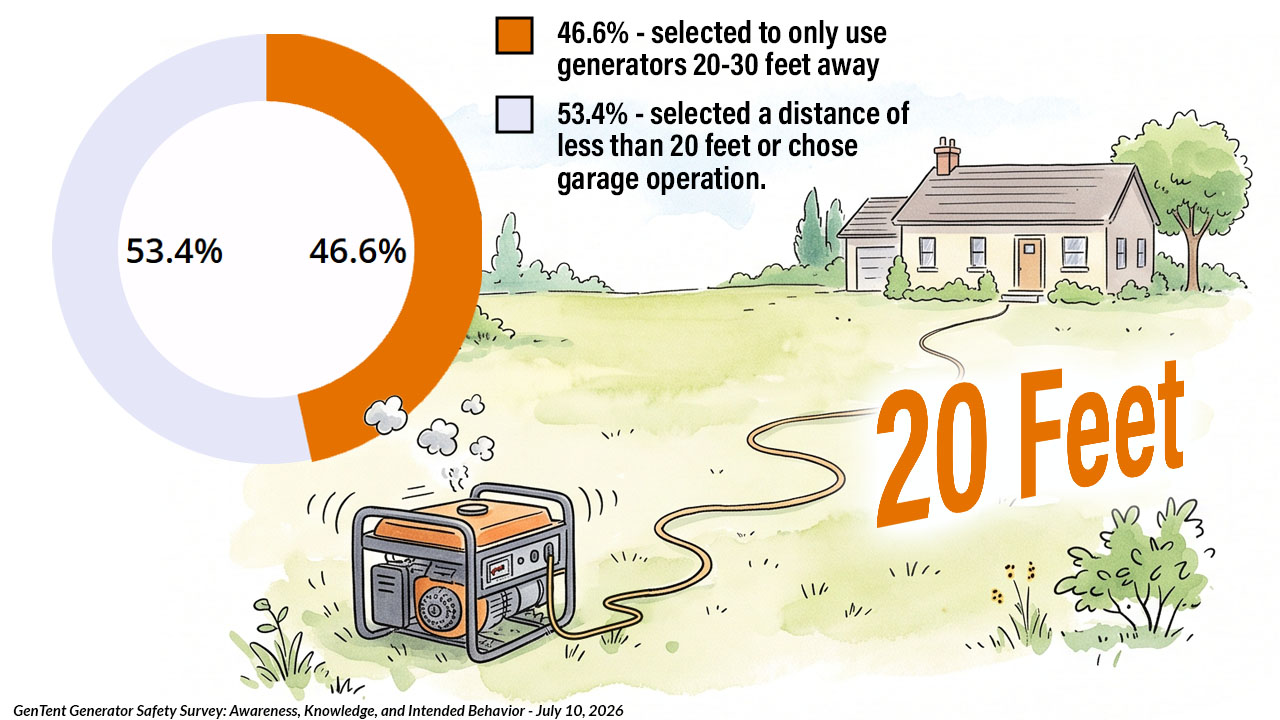
CPSC puts the risk in plain language: one portable generator can produce as much carbon monoxide as hundreds of cars, and generators should be used outside only, at least 20 feet away from homes, with exhaust facing away. DuroMax also advises users to run generators outdoors, ideally 20 feet from doors, windows, and vents.
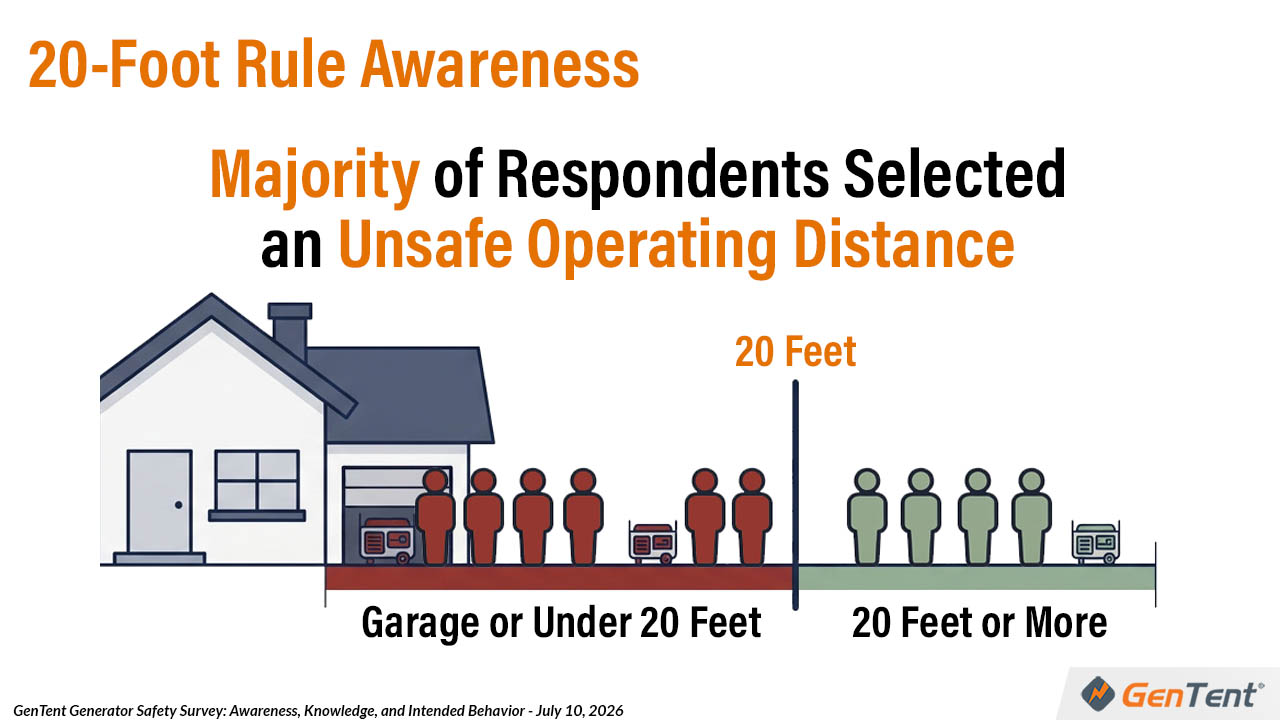
The fact that generator manufacturers are now reinforcing this message is important progress. In the GenTent survey, 46.6% of respondents selected 20 or 30 feet as the proper safe operating distance. But 53.4% still selected a distance of less than 20 feet or chose garage operation.
The next step is not replacing the 20-foot message. It is helping people make it practical. Consumers also need to plan the generator location, cord path, exhaust direction, fuel storage, and weather protection before the outage starts.
Consumers Still Underestimate Carbon Monoxide Output
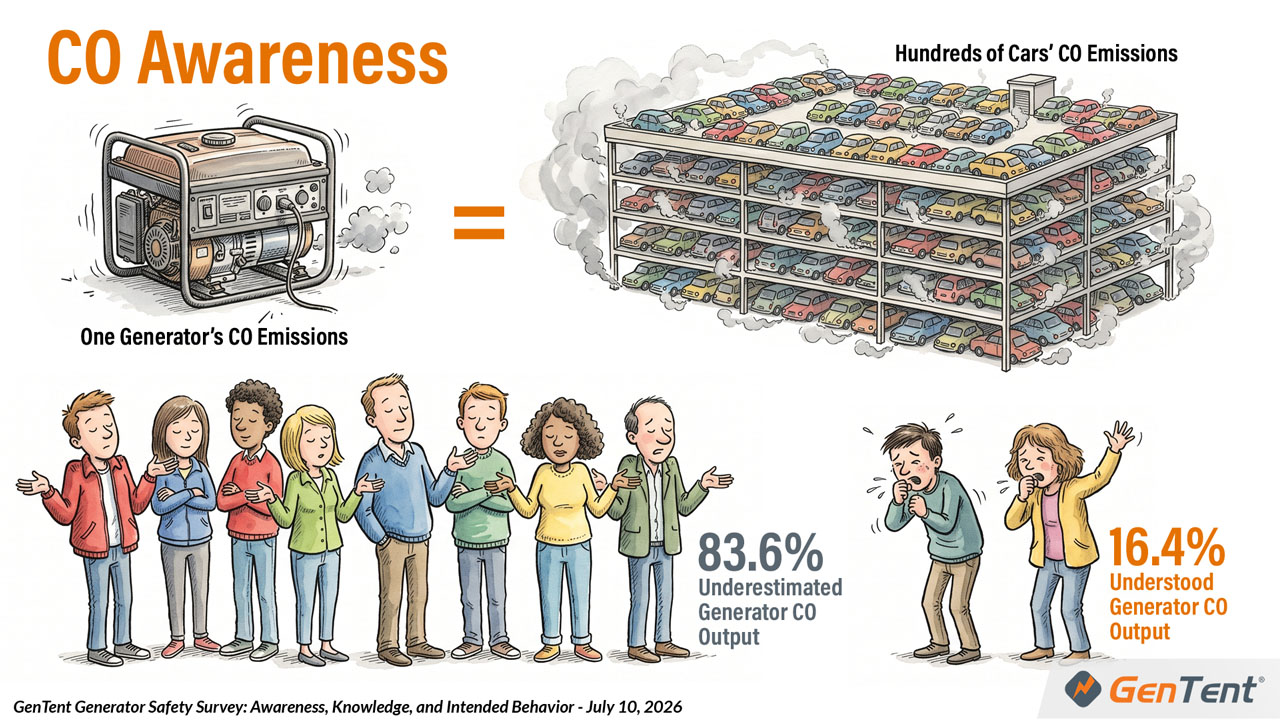
The survey also showed a major knowledge gap around carbon monoxide output. Only 16.4% selected the safety-aligned answer that a single portable generator can produce as much carbon monoxide as hundreds of cars combined. That means 83.6% underestimated the generator’s potential CO output.
That misunderstanding changes how people think about risk. If a consumer underestimates generator CO output, they may also underestimate the danger of running one in a garage, under a porch, or near an open window.
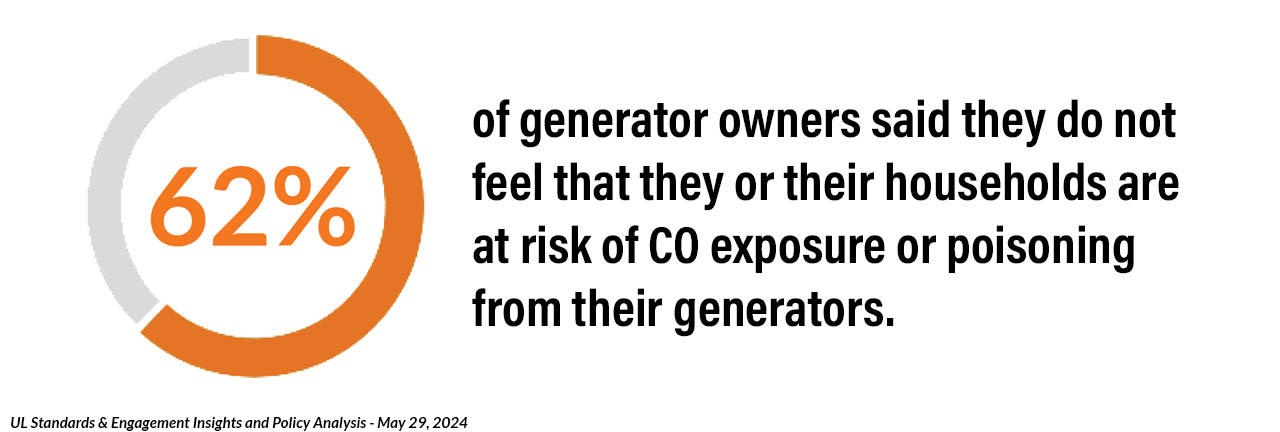
ULSE’s consumer research suggests this awareness gap extends beyond one survey, finding that many generator owners do not feel at risk from CO exposure or do not realize portable generators are a potential CO source.
Carbon monoxide is invisible and odorless. It can build up quickly and move through doors, windows, vents, garages, and other openings. That is why safe placement cannot be a last-minute decision. It has to be planned before the outage.
Wet Weather Is Where Safety Guidance Collides
Wet weather creates one of the hardest generator safety problems for consumers. The generator needs to stay outside because of carbon monoxide. But generator manufacturers also warn against unsafe operation in rain, snow, water spray, or wet conditions because of electrical shock, equipment damage, and other hazards.
Among portable generator owners in the consumer safety survey, only 7.8% selected waiting for the storm to pass.
When looking only at consumers who would continue operating during rain, snow, or high winds, 68% selected unsafe options like unrated structures, makeshift covers, or unprotected operation that was not aligned with the stated safety guidance.
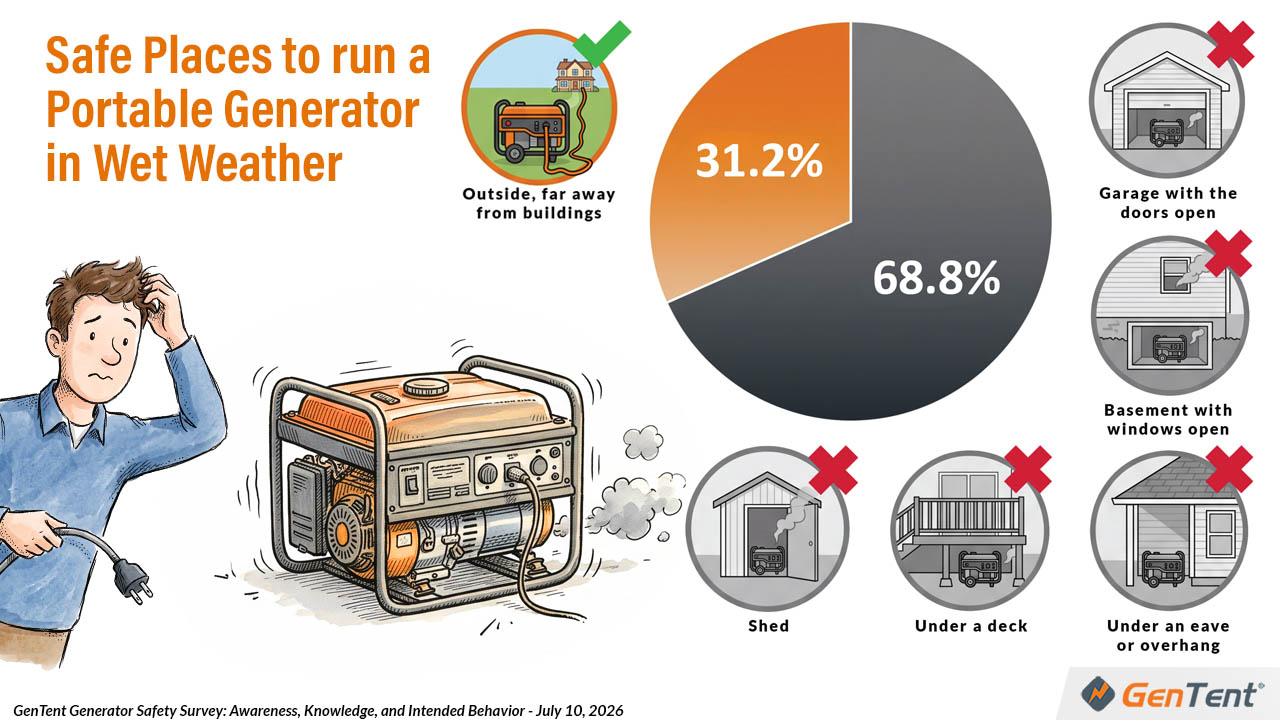
This is the core safety gap. Waiting until weather passes may be safest in some situations, but during a real outage it may not feel practical. If a sump pump is needed, phones are dying, or food is spoiling, people look for a workaround. Without a safe and practical option, the workaround can become the hazard.
Heat, Fire, and Category Clarity Matter
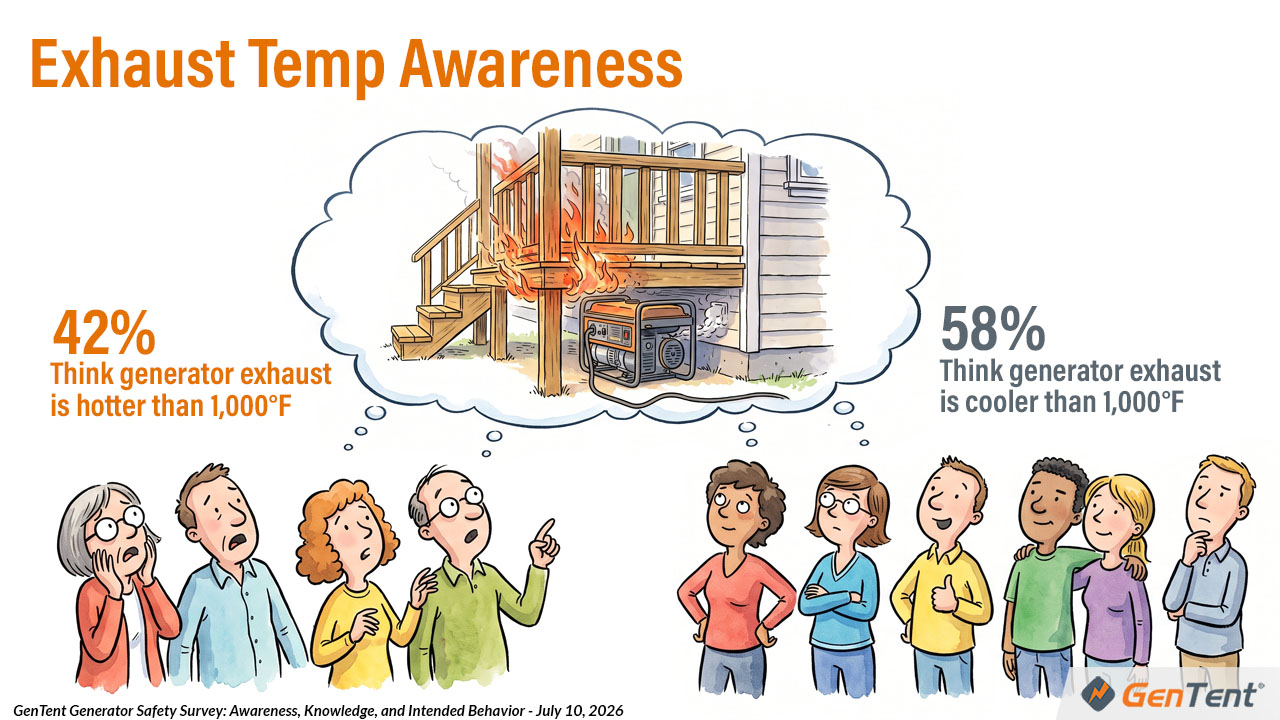
Generator safety is not only about carbon monoxide. It is also about heat, fire, airflow, exhaust clearance, electrical exposure, and combustible materials.
The survey found that only 42% of those polled knew that generator exhaust can exceed 1,000°F. The remaining 58% underestimated the potential exhaust temperature. Respondents were then shown that some newer portable generators can produce exhaust temperatures over 1,300°F, hot enough to start a fire if nearby materials are too close.
That becomes particularly important as many wet-weather workarounds involve materials never designed for generator operation: plywood, plastic, tarps, doghouse-style shelters, storage covers, and low-cost covers with unclear flammability claims.
A running generator should never be boxed in, wrapped up, or placed near materials that can burn. Proper airflow, open exhaust, heat clearance, and flame-resistance are part of the safety system.
This is also why the phrase “generator tent” needs a clearer definition. A storage cover is not a running cover. A tarp is not an engineered generator tent. A material claim is not a complete system evaluation.
Education Changes the Decision
The most important survey finding may also be the most hopeful. After respondents learned about carbon monoxide output, safe operating distance, wet-weather hazards, and exhaust temperature, 97.8% said that a manufacturer- or retailer-supported safety product would make them more likely to follow generator safety guidelines.
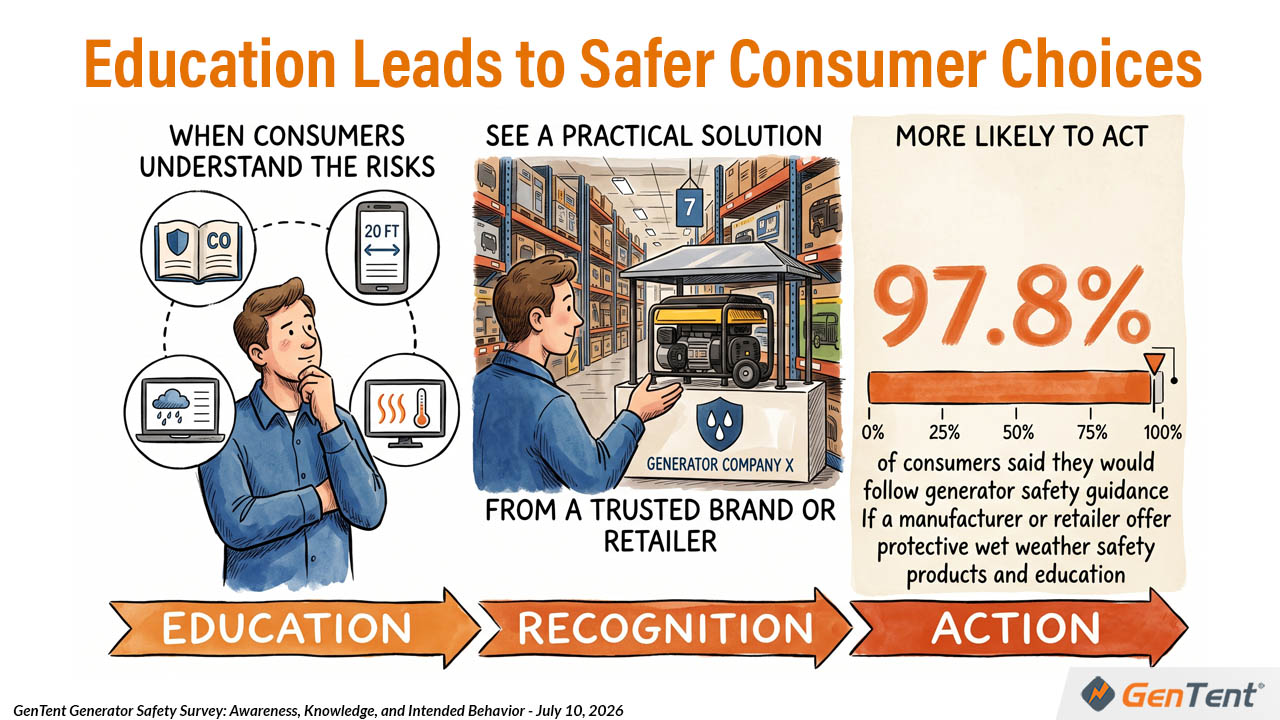
That changes the story. The problem is not that consumers do not care about safety. The problem is that many consumers need clearer education, trusted guidance, and a practical way to do the safe thing when the unsafe shortcut feels easier.
That does not prove purchase intent, but it does show perceived value after education. When consumers understand the problem and trust the brand that gives them clear guidance, they are more willing to invest in a solution. Safety education does not weaken demand. It can strengthen trust.
Warnings tell consumers what not to do. Education and practical solutions help them understand what to do instead.
Why UL 2201A Matters
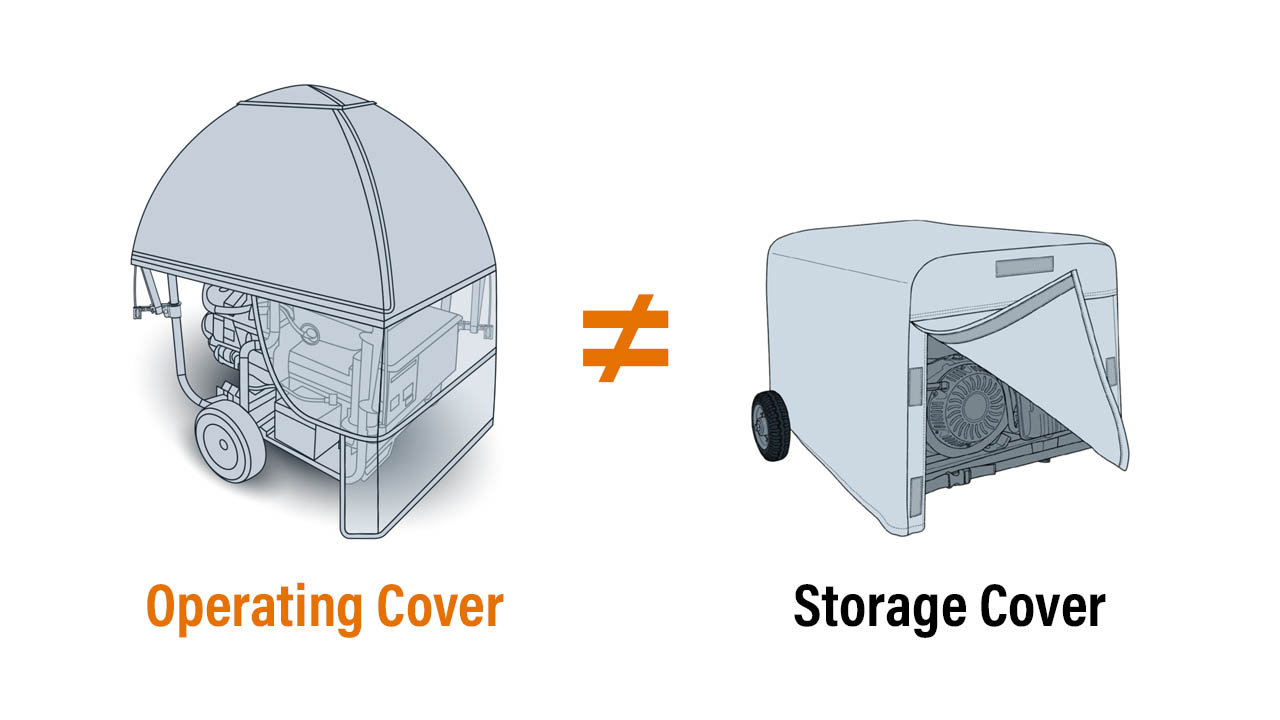
The survey found that people familiar with GenTent or generator running covers were more likely to complete the survey without making an at-risk operating decision. But wet-weather behavior did not show the same lift, which reinforces a key point: general awareness is not enough.
Consumers also need to understand what makes a running cover safe. This is where UL 2201A matters. GenTent’s white paper explains that UL 2201 and PGMA G300 address generator CO hazard mitigation, but not generator accessories, tents, running covers, or products intended for operation.
UL 2201A helps create a category-specific benchmark for generator tents, running covers, and assemblies intended for use with operating portable generators outdoors. That distinction helps separate storage products from products represented for operating use.
What the Survey Really Shows
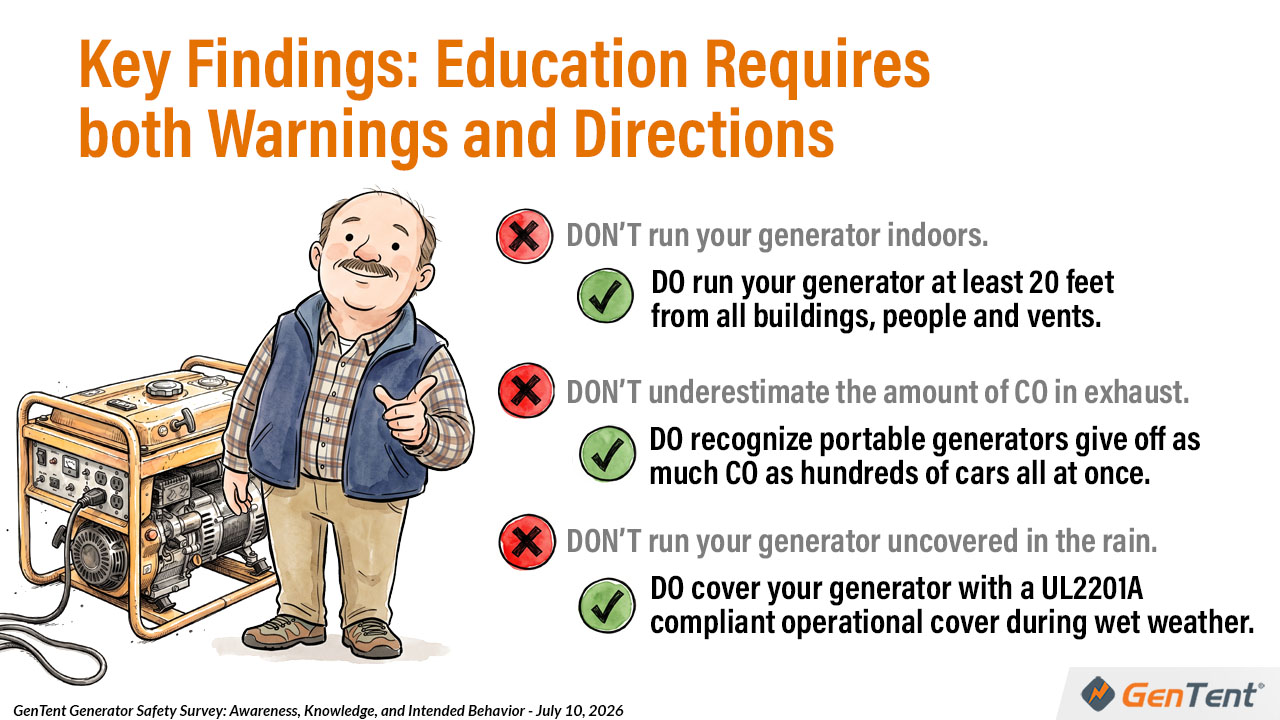
This survey is not a story about consumers ignoring safety. It is a story about consumers needing clearer direction.
They need to know that CO shutoff is a safeguard, not permission to run a generator in an unsafe location.
They need to know why 20 feet matters and how to make that distance practical.
They need to understand the scale of generator carbon monoxide output.
They need to recognize that wet-weather operation creates a real safety dilemma, not an invitation to improvise with a tarp, porch, garage, or plywood cover.
They need to understand that exhaust heat and fire risk are part of generator safety too.
Warnings are necessary, but warnings alone are not enough. Consumers need a practical path from “do not do that” to “do this instead.”
Make the Safe Choice Before the Emergency
Portable generator safety has made real progress. CO shutoff technology is more common. The 20-foot rule is gaining broader adoption. Manufacturers, retailers, safety agencies, and standards organizations are increasingly aligned around outdoor operation, CO alarms, exhaust direction, fuel safety, safe electrical connection, and wet-weather guidance.
ESFI reinforces that generator safety also includes proper electrical connection, grounded cords, GFCI protection, transfer switches, and avoiding backfeeding. Safe generator use is not one decision. It is a system of decisions made before the pressure is high.
Before the next outage, know where your generator will run, how far it will be from your home, how exhaust will be directed, how it will be connected, and how it will be protected from weather without compromising airflow, exhaust clearance, or outdoor operation.
Use the GenTent Fit Finder to confirm the correct running cover for your generator. Learn more about UL 2201A and why generator running covers need their own defined safety category.
Most importantly, make the safe choice before the emergency forces the decision.