
Materials and Fire Performance
Textiles, coatings, plastics, hardware, and other components would be evaluated using applicable flammability and heat-performance requirements.

Generator not listed? Try our Advanced Fit Finder
Proposed Standard Under Development
Establishing a consistent minimum safety benchmark for products already being manufactured, sold, and used with operating portable generators.
An Existing Product Category
UL 2201A is a proposed product safety standard being developed to establish minimum flammability performance requirements for generator tents, running covers, and assemblies used with portable generators during operation.
Products in this category have been sold for more than a decade, but their materials, construction, and safety claims can vary significantly. Consumers have little practical ability to determine whether a product is designed to resist ignition, limit flame spread, or withstand exposure to hot generator components and exhaust.
UL 2201A is not intended to endorse every generator cover or determine where a portable generator may be operated. Its purpose is to create an objective and repeatable way to evaluate the flammability performance of the materials, components, and complete assemblies within this product category, ensuring dangerous products do not add unknown risks to portable generator operation.
Addressing an Existing Consumer Safety Gap
Generator tents, running covers, and similar products are already being manufactured, marketed, sold, and used around operating portable generators. Yet products that appear similar online may be made from significantly different fabrics, plastics, fasteners, supports, coatings, and heat-resistant materials.
Consumers generally cannot determine from appearance, price, or advertising whether a product has been engineered to resist ignition, limit flame spread, withstand generator heat and exhaust, or avoid creating additional hazards during operation.
These are operational fire-exposure demonstrations, not UL 2201A certification tests and not the proposed UL 2201A test method. They illustrate the potential difference between engineered fire-resistant construction and an unevaluated combustible product.
The Complete Product Matters
Generator tents and running covers can be made from many different materials, including fabrics, metals, alloys, supports, fasteners, mounting hardware, and other components. Manufacturers participating in the development of UL 2201A use different materials and product designs, which is why a claim about a single fabric does not necessarily show how the complete product will perform around an operating generator.
Products evaluated under the proposed UL 2201A requirements may use many different materials and designs. The applicable materials and complete assembly would need to meet minimum flammability requirements while maintaining generator airflow, exhaust clearance, access to controls, and compatibility with built-in safety systems.
| Safety Consideration | Product Designed for Proposed UL 2201A Evaluation | Unrated or Unevaluated Product |
|---|---|---|
| Materials | Textiles, polymers, hardware, and other components are selected and evaluated to meet applicable flammability and heat-performance requirements. | Products evaluated in the market assessment included highly flammable materials such as expanded polystyrene foam, cotton, and unidentified pressed fiberboard. Some provided little or no information about their material makeup, fire resistance, or temperature limits. |
| Flame Behavior | Materials and assemblies are evaluated for ignition, sustained burning, flame propagation, and other applicable fire hazards. | A product may ignite, continue burning, spread flame, melt, or expose the generator and nearby property to additional risk. |
| Complete Assembly | Panels, seams, fasteners, supports, mounting components, and ancillary materials are considered as part of the finished product. | Safety claims may rely on a single material description without evaluation of the complete installed assembly. |
| Generator Operation | The accessory is designed to avoid impeding required airflow, exhaust clearance, access to controls, and built-in generator safety systems. | The product may obstruct airflow, redirect exhaust, contact hot components, or create other unintended operating conditions. |
| Instructions and Warnings | Product identification, installation limitations, compatibility information, inspection guidance, and safety warnings are provided. | Instructions, limitations, compatibility guidance, and fire warnings may be incomplete, unsupported, or absent. |
| Consumer Transparency | Safety claims can be supported by objective requirements, documented materials, and repeatable testing. | Consumers may be asked to rely primarily on appearance, price, reviews, or general marketing language. |
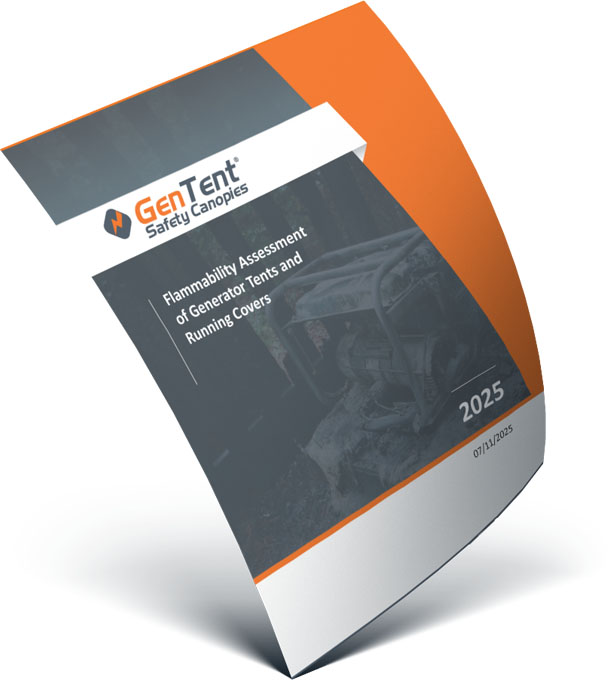
Review the Market Assessment
GenTent assessed more than 20 generator tents and running covers sold to consumers, documenting their materials, claimed fire ratings, whether they ignited or spread flame, and how long they continued burning after exposure.
The assessment was designed as a practical stationary fire-exposure comparison based on conditions that may occur around generator operation. It was not an NFPA 701 test and was not conducted as a UL 2201A test.
The results demonstrate why unrated or non-engineered products can introduce additional flammability risk and why consumers, manufacturers, retailers, and safety officials need a consistent product-category standard.
Download the Flammability AssessmentResearch Into Action
Market testing found generator covers made from materials that could ignite, spread flame, or create an additional hazard around an operating generator. These findings, supported by material testing, operational demonstrations, and industry collaboration, helped show the need for a dedicated flammability standard.
UL 2201A is being developed with input from across the generator, running-cover, retail, standards, and safety communities.
The proposed standard does not favor one manufacturer or require one product design. It is intended to give every manufacturer a fair and consistent way to show that its materials and complete assembly meet minimum flammability requirements without interfering with generator operation or existing safety protections.
UL 2201A remains a proposed standard under development. The demonstrations and assessment referenced above are supporting research and educational materials, not certification testing. Products should not currently be represented as UL 2201A certified or compliant.
More Than a Fabric Test
UL 2201A is intended to look beyond a single material claim and evaluate the materials, construction, and finished product as a complete system.
Textiles, coatings, plastics, hardware, and other components would be evaluated using applicable flammability and heat-performance requirements.
The assembled product would be evaluated around generator heat and exhaust, including its panels, seams, supports, fasteners, clearances, and protective components.
Products would require appropriate warnings, installation guidance, product identification, material traceability, and manufacturing controls.
UL 2201A would add a flammability safety benchmark without replacing portable generator manufacturer instructions, carbon monoxide protections, electrical requirements, safe placement guidance, or standards covering the generator itself.
A Consensus Standards Process
UL 2201A is being developed through the UL Standards & Engagement consensus process. Manufacturers, industry representatives, retailers, safety professionals, and other affected stakeholders can review the proposal, submit technical comments, recommend changes, and participate in formal voting.
Generator running-cover manufacturers, portable generator industry representatives, technical experts, safety stakeholders, and supply-chain participants can contribute to the development of an objective and manufacturer-neutral standard.
GenTent is participating as a manufacturer representative. Representatives of the Portable Generator Manufacturers’ Association also reviewed the preliminary proposal and submitted comments that helped clarify its scope.

Meeting the Consumer Minimum Safety Expectation
The goal is to establish an objective and repeatable minimum flammability standard for an established and growing product category, helping protect consumers from avoidable fire hazards.
A product is not safer simply because it is called a generator tent, shelter, canopy, or running cover. Safety ratings and claims should be verifiable and supported by objective requirements and repeatable testing.
Development status: UL 2201A remains a proposed standard under development. Requirements may change before publication, and no product should currently be represented as UL 2201A certified or compliant.