

Must Have Camping Supplies
Posted by Rachel F. and Brian T. on Jun 8th 2023
10 Must-Have Camping Supplies for Safer Off-Grid Power and Generator Use
Camping preparation is essential whether you are heading to a campground, staying in a camper, setting up near a cabin, or planning an off-grid trip. A strong camping supplies list should cover comfort, cooking, lighting, backup power, weather protection, and safety.
Portable generators, rechargeable lights, power stations, camp stoves, heaters, and appliances can make camping more comfortable, but they also require planning. Carbon monoxide safety, safe distance, fuel storage, outdoor-rated cords, and wet-weather generator protection should all be part of your camping checklist before you leave home.
Trusted camping resources like the National Park Service Ten Essentials, KOA camping checklist, Camping World off-grid camping essentials, and Popular Mechanics camping gear guide all point to the same idea: the best camping setup is not just about comfort. It is about preparation, safety, and having the right gear before conditions change.
Below are 10 must-have camping supplies to help you prepare for a safer, more reliable trip, especially when portable power is part of your campsite setup.
1. Navigation and Emergency Communication
The first essential for camping is knowing where you are going and how you will communicate if plans change. Even if you use your phone for maps, campground information, or weather updates, bring backup power and navigation options.
The National Park Service Ten Essentials includes navigation, such as a map, compass, GPS system, and an extra battery for your phone. For RV camping and off-grid travel, route planning matters even more because remote roads, low-clearance routes, fuel stops, campground access, and emergency exits may not be close by.
A paper map, compass, GPS, charged phone, and backup battery can make a major difference when cell service is weak, roads are unfamiliar, or weather changes quickly.
2. Outdoor-Rated Extension Cords
Extension cords are a camping essential when your power source needs to stay away from your tent, camper, RV, cabin, or cooking area. If you are using a portable generator, the cord should be an appropriate length to help you keep the generator in a safer outdoor location instead of pulling it closer to where people are sleeping, sitting, or gathering.
Choose heavy-duty, outdoor-rated extension cords that match the electrical load you plan to run. Check cords for cuts, exposed wires, damaged plugs, and missing grounding pins before every trip. A longer cord can be useful, but it still needs to be properly rated for the appliances and devices you plan to power.
The goal is not just convenience. The goal is a safer campsite layout that keeps power accessible while keeping generator exhaust away from people, shelters, doors, windows, vents, and sleeping areas.
3. Portable Chargers, Solar, and Power Stations
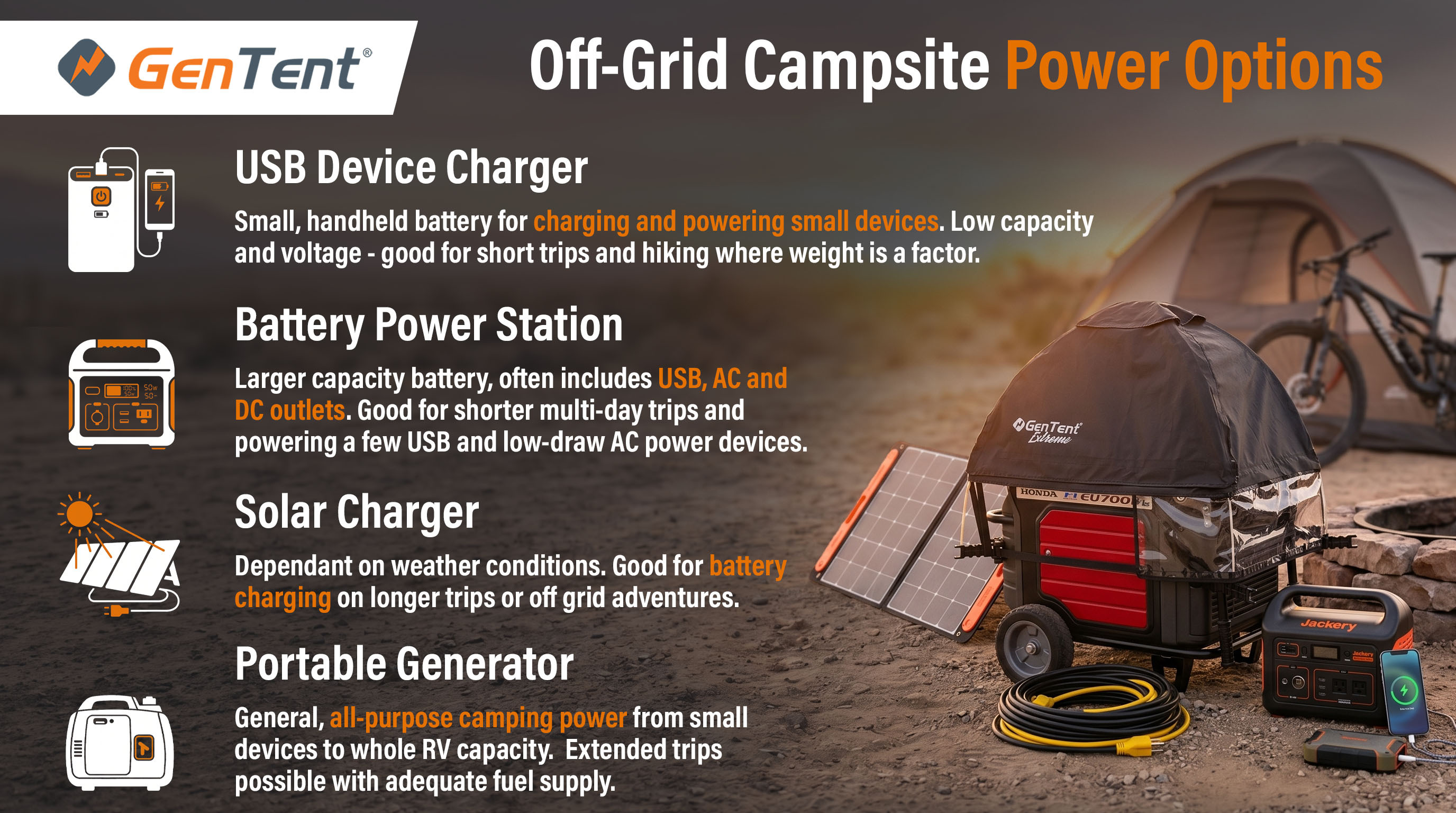
Portable chargers help keep phones, headlamps, cameras, GPS units, radios, and small electronics ready when you are away from outlets. They are especially important for off-grid camping, where reliable communication and navigation may depend on battery life.
For longer trips, consider a layered power setup. A portable power bank may be enough for phones and headlamps, while a portable power station or solar charging setup can help reduce generator runtime and keep smaller devices charged between generator use.
Camping World includes solar setups and portable power stations as off-grid camping essentials because they can help support remote camping when shore power is not available. A portable generator may still be the main power source, but smaller charging tools can reduce how often it needs to run.
4. Flashlights, Headlamps, and Rechargeable Lighting
Once it gets dark at camp, lighting becomes both a comfort item and a safety item. Flashlights, headlamps, lanterns, and rechargeable campsite lights help you move around safely, cook after sunset, check equipment, and respond quickly if weather changes overnight.
Flashlights may already be an owned item in your house, and while they are effective, you have to carry them in your hand. Headlamps are hands-free, making them useful for hiking, cooking, repairs, campsite setup, and generator checks after dark.
The National Park Service includes illumination as one of the Ten Essentials. Rechargeable LED lighting is also useful because it can reduce the need to run larger power sources just to light the campsite.
5. Water, Storage, and Food Safety
Water planning is one of the most important parts of camping preparation, especially when camping off-grid, boondocking, or staying somewhere without reliable access to clean water. Bring more water than you expect to need for drinking, cooking, cleaning, pets, and emergency use.
Camping World recommends planning water needs before an off-grid trip, and KOA's camping checklist includes water treatment, filtration, emergency freshwater, and personal water bottles as part of broader camping safety planning.
Food storage matters too. A cooler may be enough for a weekend trip, while a portable fridge can be useful for longer stays, RV camping, or off-grid trips where food safety matters. If your fridge requires electricity, include it in your power plan before you leave. For longer trips, food storage is not just about convenience. It is part of your safety and power plan.
6. First-Aid, Medications, and Emergency Basics
A first-aid kit belongs on every camping supplies list. Cuts, burns, bug bites, allergic reactions, headaches, stomach issues, and minor injuries can happen quickly outdoors, especially when cooking, hiking, working around equipment, or setting up camp in the dark.
The National Park Service includes first-aid supplies in its Ten Essentials, and KOA's camping checklist highlights first-aid as one of the most important safety items to keep on hand.
For longer trips, add emergency contacts, basic instructions, extra medication, and any family-specific supplies in case weather, vehicle trouble, or campground conditions keep you away from home longer than expected.
7. Camp Stove, Grill, and Cooking Safety
A camp stove and cookware setup can make outdoor cooking easier, cleaner, and more reliable than cooking over an open fire. Pack reusable plates, utensils, storage containers, pans, and cleaning supplies that match your campsite setup.
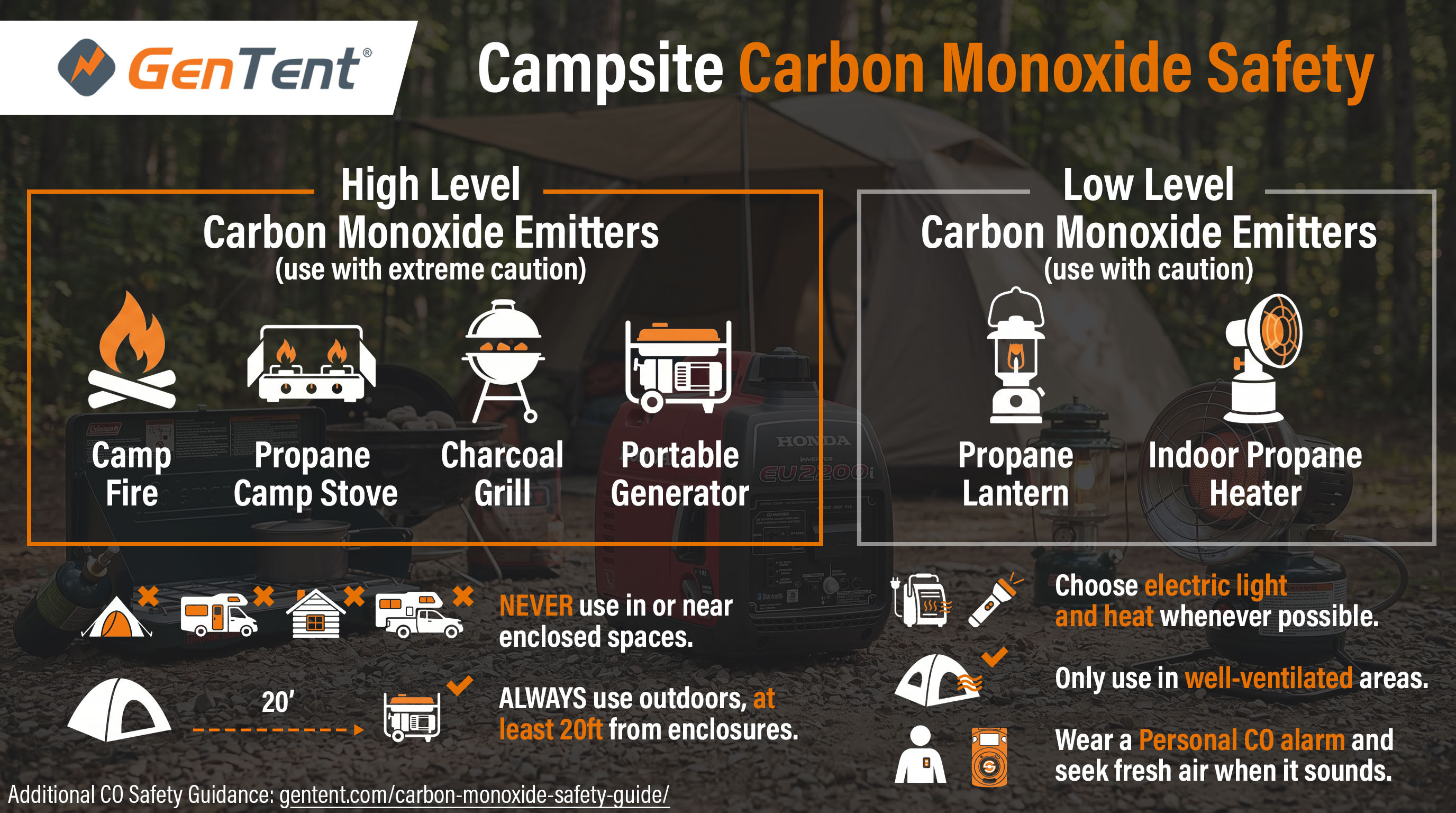
Any fuel-burning cooking device also deserves safety attention. Camp stoves, charcoal grills, propane appliances, and similar equipment can produce carbon monoxide. Never use them inside a tent, camper, RV, cabin, garage, or enclosed shelter.
The U.S. Consumer Product Safety Commission warns that carbon monoxide is a serious hazard from fuel-burning products. That same safety mindset applies at camp: cook outdoors in a well-ventilated area and follow the appliance manufacturer's instructions.
Carbon monoxide is not only a generator issue. It is a camping safety issue whenever fuel-burning equipment is used.
8. Camp Tools, Repair Kit, and Fire-Starting Basics
Basic tools can make a campsite easier to set up and maintain. A multi-tool, mallet, small shovel, tire gauge, repair tape, zip ties, paracord, work gloves, and a compact tool kit can help with everyday campsite problems.
The National Park Service includes repair kits and tools in its Ten Essentials, including items such as a knife, gear repair supplies, and other basic tools. KOA also includes camping tools and safety items across its packing checklist.
Fire-starting supplies can be useful where campfires are allowed, but always follow local fire restrictions and campground rules. Waterproof matches, a lighter, approved firestarter, and a safe fire plan can help you stay prepared without creating unnecessary risk.
9. Heater, Fan, and Weather Comfort Gear
A fan can help circulate air in warm weather, and a heater may be useful when temperatures drop. Choose equipment that is appropriate for your camping setup, whether you are tent camping, RV camping, or staying in a cabin.
Be extremely careful with fuel-burning heaters. Any heater that burns fuel can create carbon monoxide and should only be used exactly as the manufacturer allows. Never use outdoor-only heaters, grills, camp stoves, or charcoal inside sleeping areas or enclosed spaces.
Weather comfort gear should also include layered clothing, rain gear, sun protection, tarps, shade, and backup shelter supplies. The National Park Service Ten Essentials includes sun protection, extra clothing, and emergency shelter because outdoor conditions can change quickly.
10. Portable Outdoor Generator
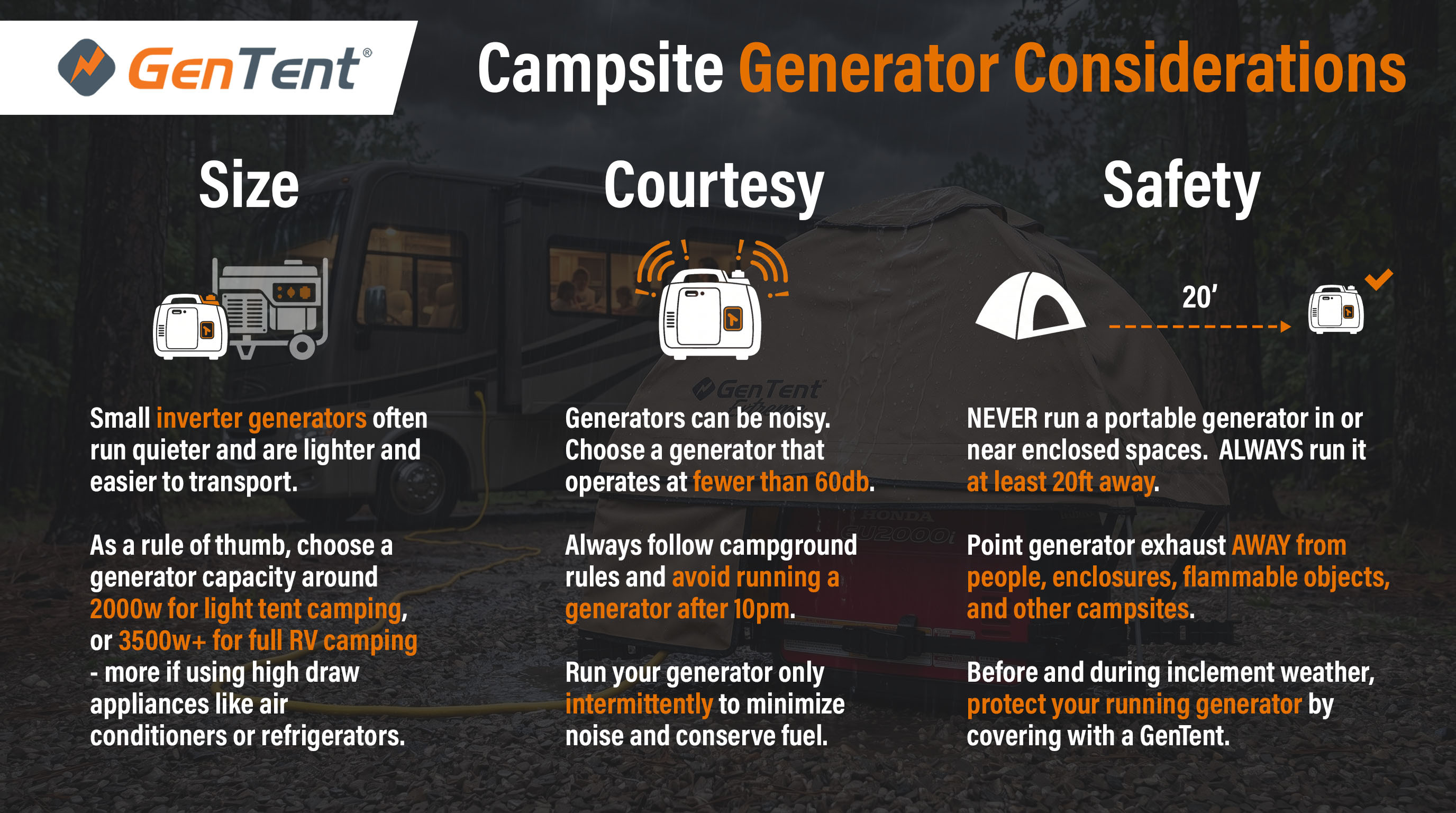
A portable generator can be one of the most useful camping supplies for RV camping, cabin stays, mobile business operations, recreation, and off-grid camping. It can help power lights, appliances, tools, chargers, fans, fridges, and other campsite essentials when shore power is not available.
Camping World lists generators as an off-grid camping essential, but choosing the right generator size and learning how to operate it safely are just as important as packing the generator itself.
Generator safety should be planned before the trip. Run your generator outdoors only, at least 20 feet away from tents, campers, RVs, cabins, doors, windows, vents, and sleeping areas whenever possible. Point the exhaust away from people, structures, and openings where carbon monoxide could collect or drift inside.
The CPSC recommends using portable generators outside only, at least 20 feet away from homes, with exhaust facing away. For camping, the same principle applies: keep exhaust far away from tents, campers, RVs, cabins, and sleeping areas.
Portable generators produce carbon monoxide, an odorless and colorless gas that can be deadly. Use working CO alarms in RVs, campers, cabins, and sleeping areas, and never run a generator inside or in an enclosed or partially enclosed space.
A generator can support the entire campsite, but only when it is used with the right placement, cords, fuel handling, ventilation, and weather protection. That is where generator safety deserves its own short checklist before you power up.
Generator Safety Checklist for Camping
Before running a portable generator at camp, review these safety basics:
- Run the generator outdoors only.
- Keep the generator at least 20 feet from tents, campers, RVs, cabins, doors, windows, vents, and sleeping areas whenever possible.
- Point exhaust away from people, structures, and openings.
- Use working carbon monoxide alarms in campers, RVs, cabins, and sleeping areas.
- Use heavy-duty, outdoor-rated extension cords.
- Keep the generator dry without blocking airflow or exhaust.
- Turn the generator off and let it cool before refueling.
- Store fuel in approved containers away from living and sleeping areas.
- Follow the generator manufacturer's instructions every time.
For a deeper camping-specific generator safety guide, read Planning Your Camping Trip: Generator Checklist. It covers generator planning, campsite setup, cord inspection, grounding, and safe operation before you head off-grid.
FEMA generator safety guidance highlights carbon monoxide poisoning, electrocution, and fire as major generator hazards. CPSC also notes that generator instructions may include use of an NFPA-rated non-combustible generator tent for inclement weather, or may state to wait until rain passes.
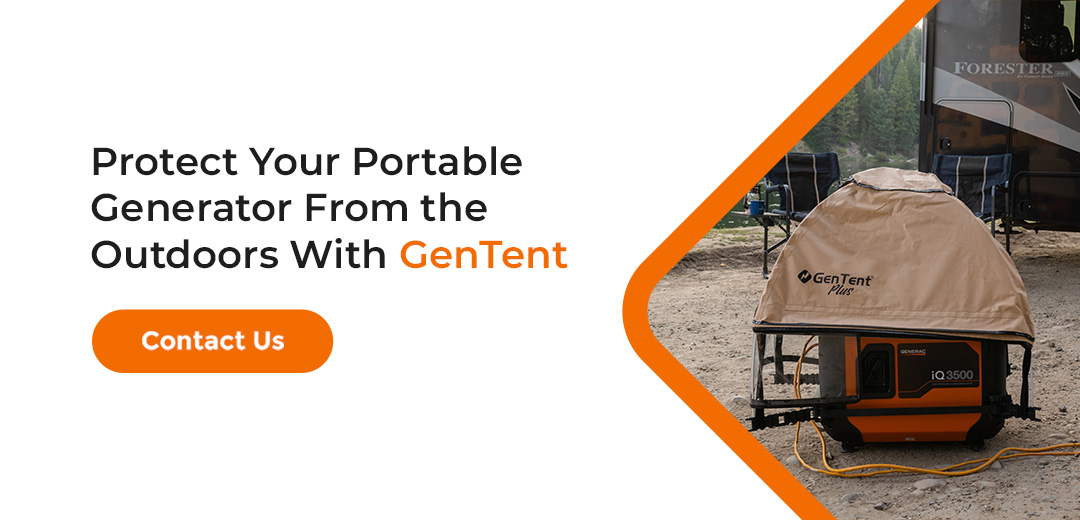
Protect Your Portable Generator From the Outdoors With GenTent
Portable generators are often used when weather is not ideal: during off-grid trips, rainy weekends, RV stops, cabin stays, and campsite power outages. The problem is that rain and wind can pressure campers to move a generator too close to a tent, camper, RV, cabin, porch, or overhang. That can increase carbon monoxide risk.
GenTent helps solve that problem by protecting your portable generator while it stays outdoors where it belongs. GenTent generator running covers are NFPA-rated and engineered to protect key electrical areas from rain while preserving airflow, exhaust clearance, access to controls, and portability.
Current GenTent systems are built for serious weather, including up to 110 MPH forecast winds and 12 inches of rain per hour. That means campers can better protect their generator from wet weather while keeping it a safer distance from tents, campers, cabins, and RVs for carbon monoxide safety.
Before your next camping trip, confirm your generator fit before the forecast changes. Explore GenTent inverter and portable generator running covers, use the GenTent Advanced Fit Finder to find the right system, or review our portable generator safety tips before heading off-grid.
Other Camping Safety Resources Worth Reviewing
A good camping checklist should cover more than comfort. Before your next trip, review trusted outdoor preparedness and camping gear resources for navigation, water, first aid, lighting, food storage, fire safety, and emergency planning.
- National Park Service Ten Essentials for navigation, illumination, first aid, repair tools, fire, clothing, food, water, and emergency shelter.
- KOA's camping packing checklist for campsite supplies, cooking gear, safety items, first-aid, kids, pets, and personal belongings.
- Camping World's off-grid camping essentials for generators, solar setups, portable power stations, fuel storage, water storage, rechargeable lights, coolers, and boondocking power planning.
- Popular Mechanics camping gear guide for broader camping gear planning and outdoor equipment ideas.