

Preparing for Power Insecurity: Why Homeowners Must Prioritize Self Sufficiency
Posted by Justin Manteuffel on May 15th 2026
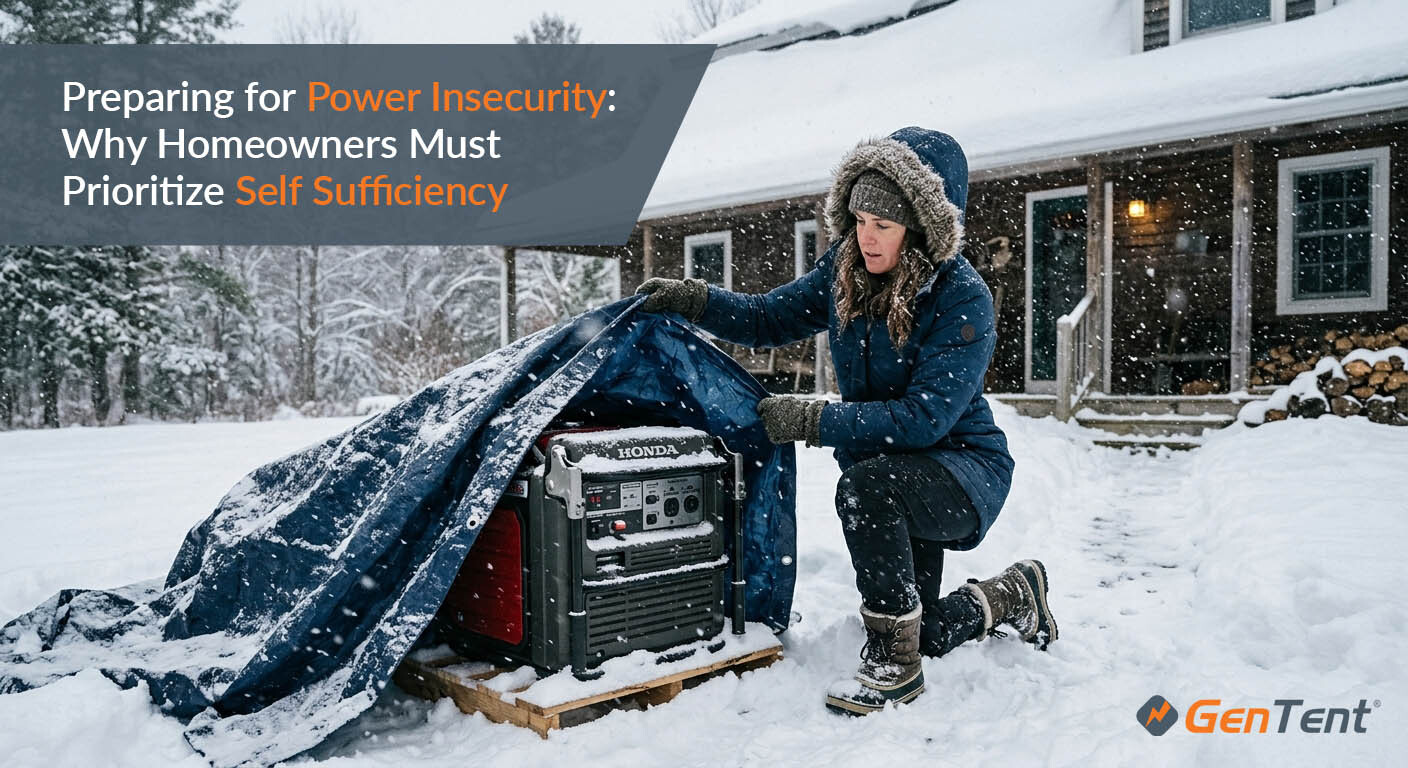
Power is becoming as unpredictable as the weather that affects it. As global average temperatures climb and weather patterns become increasingly volatile worldwide, the systems built to deliver electricity to our homes are facing a period of unprecedented strain. For the modern homeowner, the question is no longer if the power will go out, but when, and for how long. Relying solely on the power grid is becoming a shaky strategy. True peace of mind now requires a personal commitment to self-sufficiency.
Demand and Instability – a Perfect Storm
Modern power grids are facing a dual crisis where record-breaking consumer demand intersects with increasingly volatile weather patterns. As temperatures fluctuate with extremes, the strain on generation capacity becomes critical. According to the Electric Power Supply Association (EPSA), this instability is reaching a tipping point, noting that "with electricity demand growing at the fastest rate in decades and more reliable generation being retired, the risk of power shortages is becoming a persistent reality for millions of Americans."
Recent national studies illustrate more outages throughout the U.S., with a heavier reliance, fighting the dysfunction of an aging infrastructure. An analysis from the Bank of America Institute state that between 31% to 46% of distribution infrastructure in our country is “beyond its useful life.”
This imbalance is not a localized issue but a global systemic risk. The World Meteorological Organization reports that climate variability has become a primary driver of energy insecurity. When extreme heat waves persist, the efficiency of traditional power plants drops while air conditioning usage surges, creating a scenario where the grid can no longer guarantee stability. This environment transforms weather from a mere inconvenience into the primary catalyst for large-scale energy failure.
A Grid Under Siege
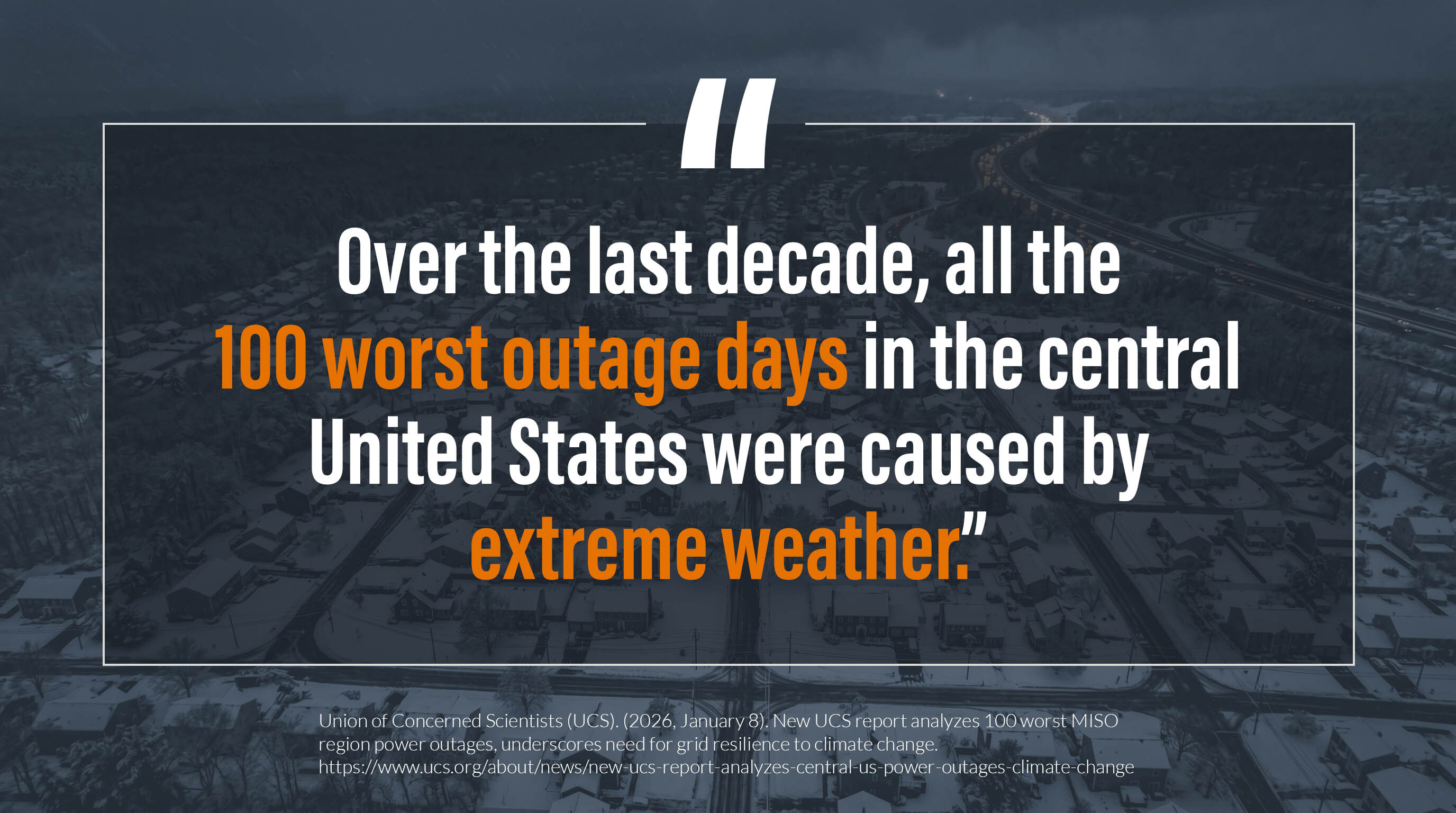
The physical infrastructure of the electrical grid was designed for the climate of the 20th century, not the atmospheric intensity of the 21st. High-impact weather events, including hurricanes, ice storms, and wildfires, are now the leading cause of prolonged blackouts. Research from the Union of Concerned Scientists highlights the severity of this shift, stating that "climate change is no longer a future threat to our energy system; it is currently driving the most severe power outages, with weather-related events accounting for the vast majority of major grid disruptions over the last decade."
Data from J.P. Morgan indicates that grid resilience has been neglected for too long, leaving the network vulnerable to "cascading failures where a single weather-induced line break can trigger a regional blackout." As storms grow in frequency and intensity, the time required to repair physical infrastructure increases. This leaves communities in the dark for days or weeks, proving that the centralized grid can no longer be the sole source of security for the modern household.
The Transition to Personal Resilience
The reality of a fragile grid requires a shift in responsibility from the utility provider to the individual homeowner. Relying exclusively on state-level energy infrastructure during a climate emergency is a becoming risky. Personal resilience through independent emergency power plans is the only guaranteed safeguard against the rising trend of outages. Homeowners must integrate localized energy solutions, such as backup generation, to maintain safety and communication during a crisis.
Achieving true energy independence requires a proactive approach. As the Union of Concerned Scientists asserts, "achieving grid resilience in a climate-changed world requires a decentralized strategy where individual households act as self-sufficient nodes." By establishing a robust emergency power plan, residents avoid the risks of food spoilage, loss of heating and cooling, and medical equipment failure. Assuming the lights will stay on during a storm is no longer enough. This new reality requires self-sufficiency.
Protecting Your Power
For millions of Americans, the portable generator is the cornerstone of a self-sufficiency plan. It provides the immediate, independent power necessary to energize the home during power loss. Yet, ironically, the very weather conditions that cause power outages: torrential rain, snow, and high winds, are the same conditions that make operating a portable generator dangerous.
Generators cannot be run in the rain or snow due to the risk of electrical short-circuits and cannot be run inside a garage or home due to the risk of CO poisoning.
Self-sufficiency is only as strong as the weakest link. If your generator is sidelined by the very storm that caused its need, you’re left in the dark. To truly secure your home against growing power insecurity, you and your equipment require all-weather protection.
Ensure your generator is ready to perform when the grid cannot. Find the perfect weather protection for your specific generator model by visiting gentent.com/fit.