

National Preparedness Month: Make the Plan Before the Power Goes Out
Posted by Brian Thomas on Sep 1st 2026
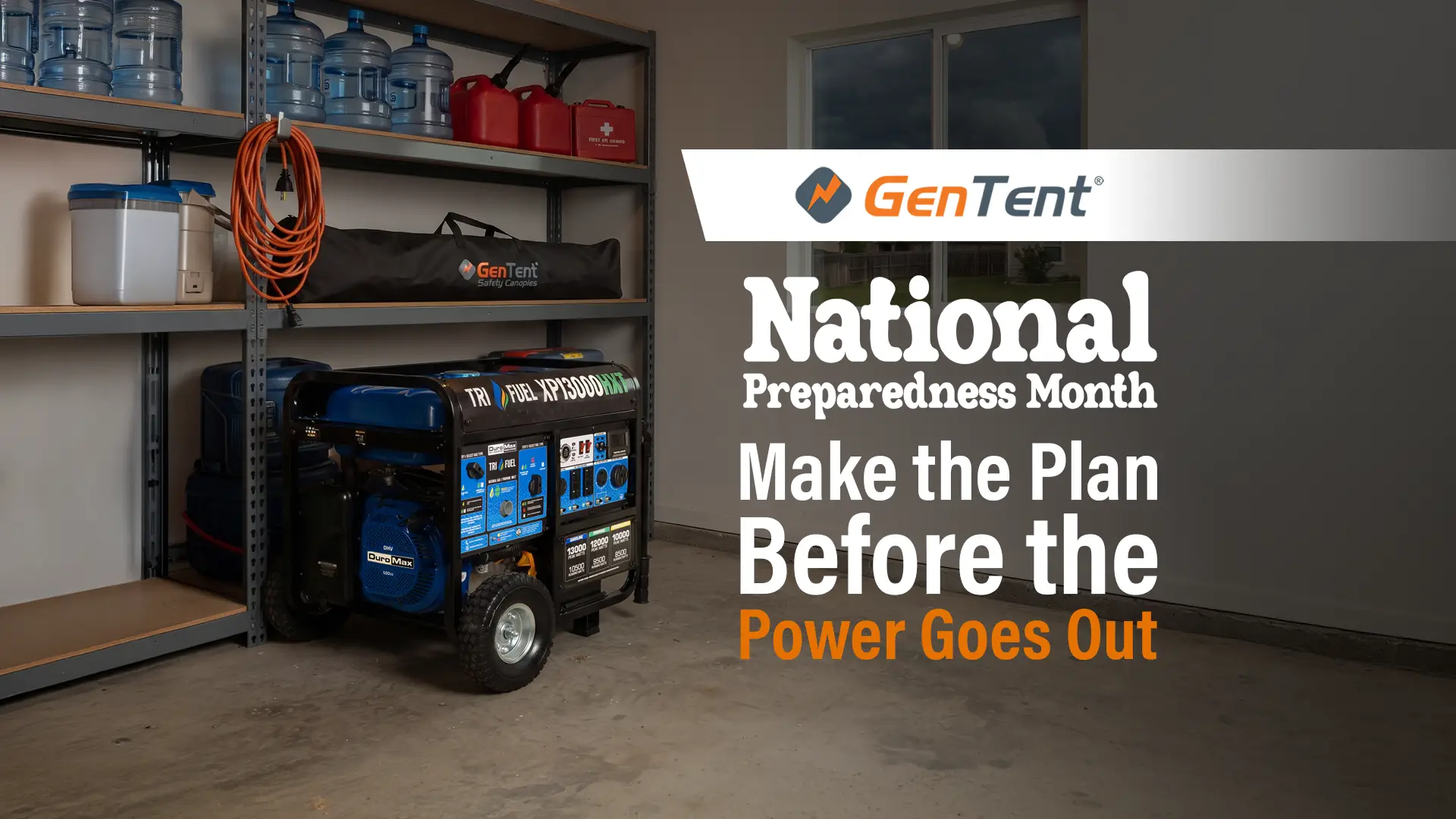
Every September, National Preparedness Month reminds families and communities to prepare before disaster strikes. That message is easy to reduce to a checklist of supplies, but preparedness is bigger than that.
Preparedness is awareness. It is education. It is having a plan before weather, outages, stress, and uncertainty make decisions harder. The goal is not to scare people into buying more stuff. The goal is to give people enough information, time, and structure to make safer choices when the situation around them is not calm.
Disasters and emergencies do not usually arrive under perfect conditions or wait until you have your plans in place. Storms knock out power. Winter weather blocks vents and closes roads. Hurricanes bring flooding and long recovery periods. Wind events, tornadoes, wildfire smoke, and severe thunderstorms can all create outages and hazards that change by the hour.
When backup power is part of the plan, generator safety has to be part of the plan too.
- Where will the generator run?
- How far is it from the home?
- Are carbon monoxide alarms working?
- How am I going to hook it up?
- Are cords grounded and rated for outdoor use?
- How do I keep the generator protected?
The time to answer those questions is before the power goes out.
Preparedness Reduces Unsafe Decisions in the Moment

During an emergency, people make decisions under pressure. They are trying to keep food cold, power medical equipment, charge phones, protect family members, and restore some sense of normalcy. That is exactly when unsafe generator decisions can happen.
A generator gets moved into a garage because it is raining. A cord gets run through a doorway without checking the rating. A generator is placed under a porch because it feels "outside enough." Fuel gets stored too close to living areas. A home is backfed through a wall outlet because someone wants a fast solution.
Most people do not make those choices because they are careless. They make them because the safe option was never planned. Preparedness removes that coin flip decision making. It creates a strategy while there is still time for rational thought.
The best preparedness plans are individualized for your home, family, business, or community, but you do not have to start from scratch. They can be built from trusted public safety guidance, then adapted to the place where you actually live, work, and use emergency power.
Trust the Experts, Then Build the Plan
NOAA and the National Weather Service remind people to understand the hazards before they arrive, including watches, warnings, evacuation zones, emergency kits, and family plans. The Federal Emergency Management Agency (FEMA) produce Ready.gov to give families a starting point for planning, communication, alerts, kits, and recovery. That broader preparedness mindset matters because it breaks a large emergency plan into smaller, achievable steps.
Many severe weather events eventually lead to the same practical question: what happens if the power goes out? That is where generator safety is no longer a separate issue. It becomes part of the emergency plan.
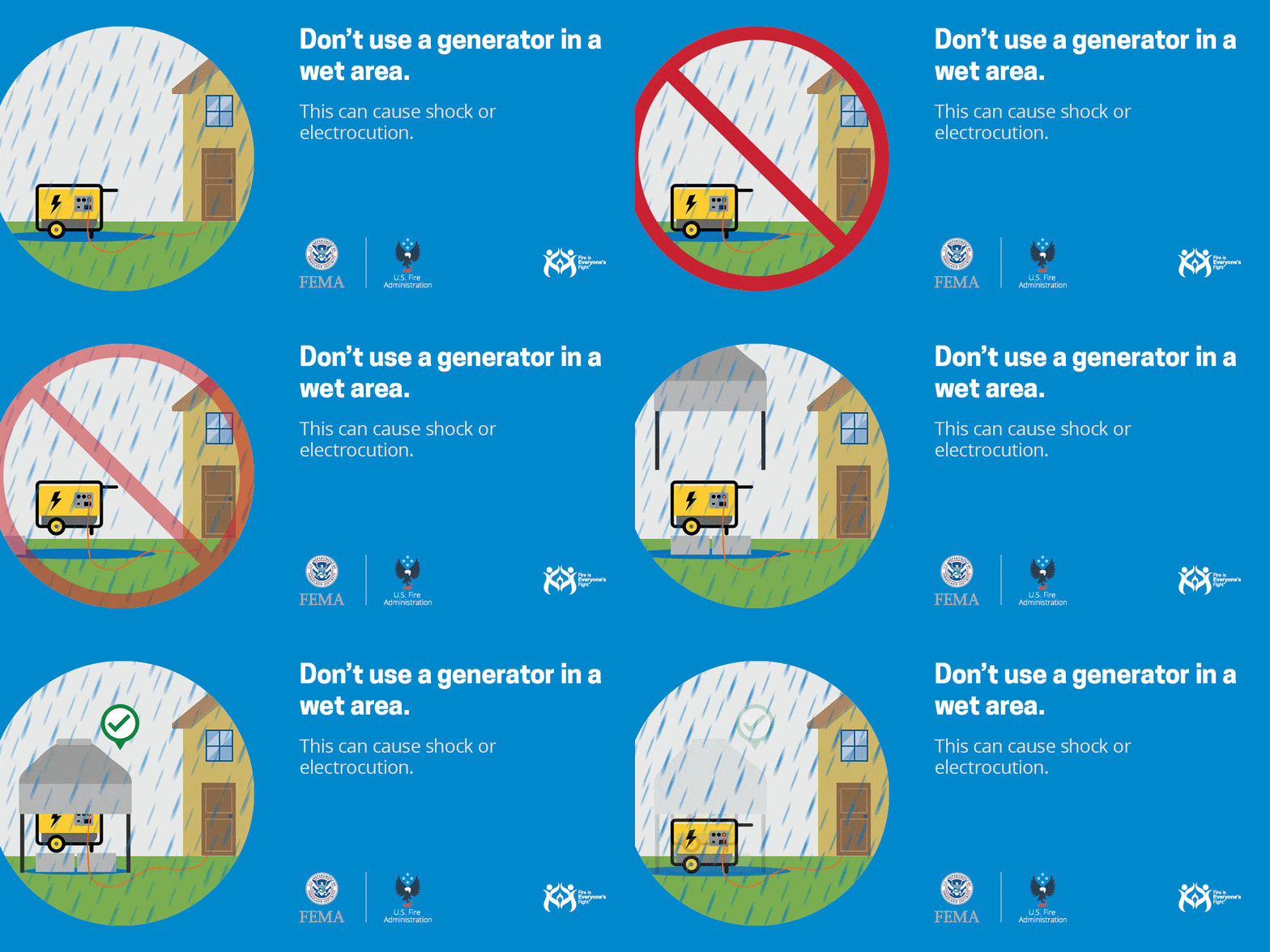
When the plan turns to portable power, the safety guidance becomes more specific. The U.S. Fire Administration explains why carbon monoxide is so dangerous: it is colorless, odorless, poisonous, and impossible to detect without alarms. Their 5 Steps to Portable Generator Safety handout brings that message down to the household level: use generators outdoors, away from doors, windows, and vents; have CO alarms; protect the generator from unsafe wet-area use; use heavy-duty extension cords; and do not refuel while the generator is running.
That same message is reinforced by CPSC, CDC, NFPA, and ESFI. Each organization looks at the problem from a different angle, but the combined guidance is consistent: keep generators outdoors and away from openings, use working CO alarms, protect your backup power from the elements reducing the risk of shock and enabling it to be used at a safe distance. Use properly rated cords, prevent backfeeding, cool the generator before refueling, and do not improvise around fire, CO, or electrical hazards.
That is why preparedness is so important. It gives people a safe option before the unsafe option feels like the only option.
What a Generator Preparedness Plan Should Include
A generator preparedness plan should be simple enough to use under stress, but complete enough to prevent the most common unsafe decisions.
Start with location. Identify a safe outdoor place to run the generator before you need it. The location should be at least 20 feet away from any entry point into your home or living space. That means doors, windows, vents, attached garages, crawlspaces, sheds, campers, cabins, tents, and other occupied spaces whenever possible. Exhaust should be pointed away from people, buildings, and openings where carbon monoxide could enter.
Plan for the right cord, and how to connect at that location. Use heavy-duty outdoor-rated extension cords that match the electrical load. Inspect them for cuts, tears, damaged insulation, missing grounding pins, or crushed sections. Keep cords away from standing water and places where they can be pinched, driven over, or damaged. For more detail on GFCI protection, load management, dry operation, and cord inspection, ESFI’s generator safety guidance is especially useful and detailed.
If the generator powers directly into home wiring, that should be done through a properly installed transfer switch by a qualified electrician. Appliances can be plugged directly into the generator or into properly rated outdoor extension cords, but NEVER plug a generator directly into a wall outlet. That practice, often called backfeeding, can create serious electrocution risks and can endanger utility workers, neighbors, and anyone connected to the same electrical system.
Install and check your CO alarms. Working carbon monoxide alarms should be installed and maintained according to manufacturer instructions. They should be tested regularly, and everyone in the home should know what to do if an alarm sounds. If the alarm goes off, get outside immediately. Call for help, and do not go back inside until emergency responders say it is safe. CO alarms only alert at dangerous levels, so any alert should be treated as a full call to evacuate. NFPA’s carbon monoxide resources and USFA’s CO prevention materials are strong resources for building that part of the plan.
Look for generators with CO shutoff technology, but do not treat that feature as permission to use the generator in an unsafe location. CO shutoff systems are an important safety advancement, but placement still matters. A generator still belongs outside, away from openings, with exhaust directed away from people and structures.
Placing a generator too close to your windows, air handlers or HVAC systems can allow CO to creep into your home without the CO Shutoff triggering because that sensor is still getting fresh air.
Keep the generator away from flammable or combustible materials. This is also where cover choice matters. Many storage covers or inexpensive generator covers are not made for operation, and some may be flammable. Do not cover a running generator with flammable materials or products not designed for running generator use.
Plan for weather. Rain, snow, and wet conditions can create electrical shock, electrocution, corrosion, and equipment damage. But moving a generator into a garage, shed, porch, carport, or near an opening can create a carbon monoxide hazard. This is the real-world safety dilemma generator owners face during outages: the generator needs to stay outside for CO safety, but it also needs protection from unsafe wet-weather exposure.
That is why the weather protection plan matters before the storm arrives.
The Wet-Weather Generator Dilemma
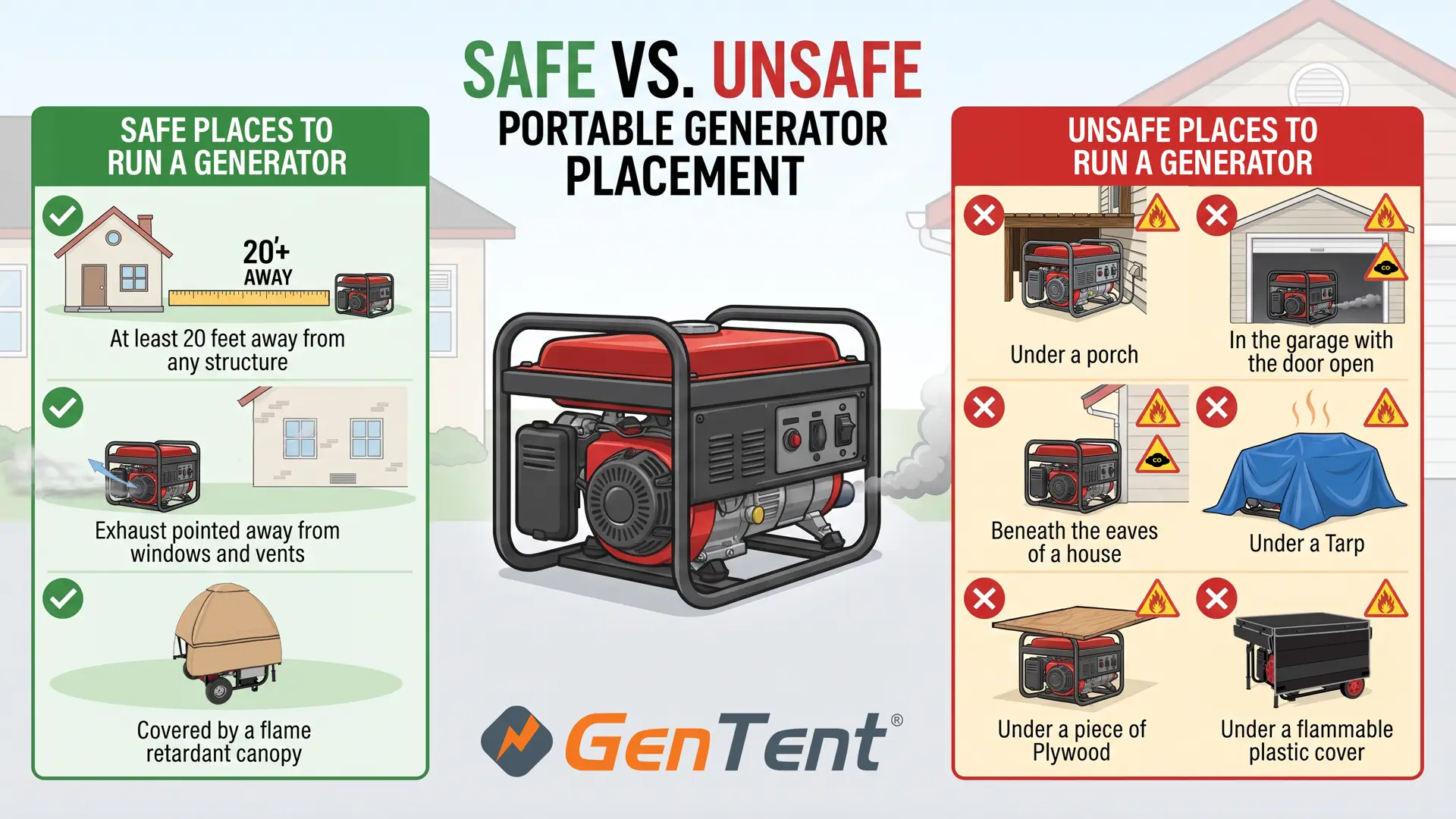
Many generator safety mistakes begin with good intentions. A homeowner knows the generator should not be left uncovered in heavy rain, so they move it under a porch. Someone worries about wet outlets, so they slide the generator into the garage with the door open. Someone tries to build a cover from plywood, plastic, or a tarp, but accidentally blocks airflow, traps heat, interferes with exhaust, or creates a new fire or CO hazard.
Preparedness should remove the need for those decisions.
The safe answer is not to ignore wet-weather warnings. It is not to bring the generator indoors. It is not to rely on a homemade cover that was never designed for running equipment. The safe answer is to read the generator manual, follow the manufacturer’s instructions, keep the generator outdoors and away from openings, preserve airflow and exhaust clearance, and use weather protection designed for a running generator.
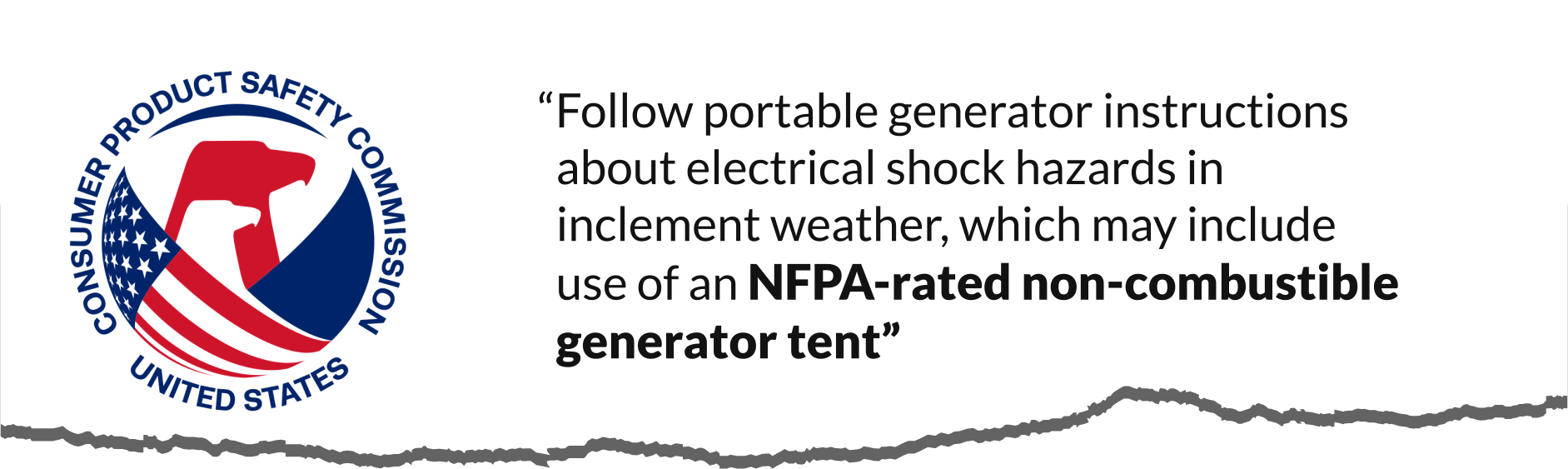
This is also where recent CPSC severe weather guidance is especially relevant. CPSC tells consumers to follow portable generator manufacturer instructions about electrical shock hazards in inclement weather, which may include using an NFPA-rated noncombustible generator tent or waiting until rain or snow passes. That guidance recognizes the same challenge generator owners face in the real world: safe outdoor placement and safe weather protection have to work together.
Where GenTent Fits
GenTent fits into this conversation because it addresses a very specific preparedness gap: how to keep a portable generator outdoors at 20 feet or more where public safety guidance says it belongs while protecting it from rain, snow, and severe weather.
GenTent generator running covers are designed to protect key electrical areas while maintaining airflow, exhaust clearance, portability, and access to controls. That matters because a generator cover should not act like a storage cover, a closed box, or an improvised tarp. It has to protect the generator without creating new hazards.
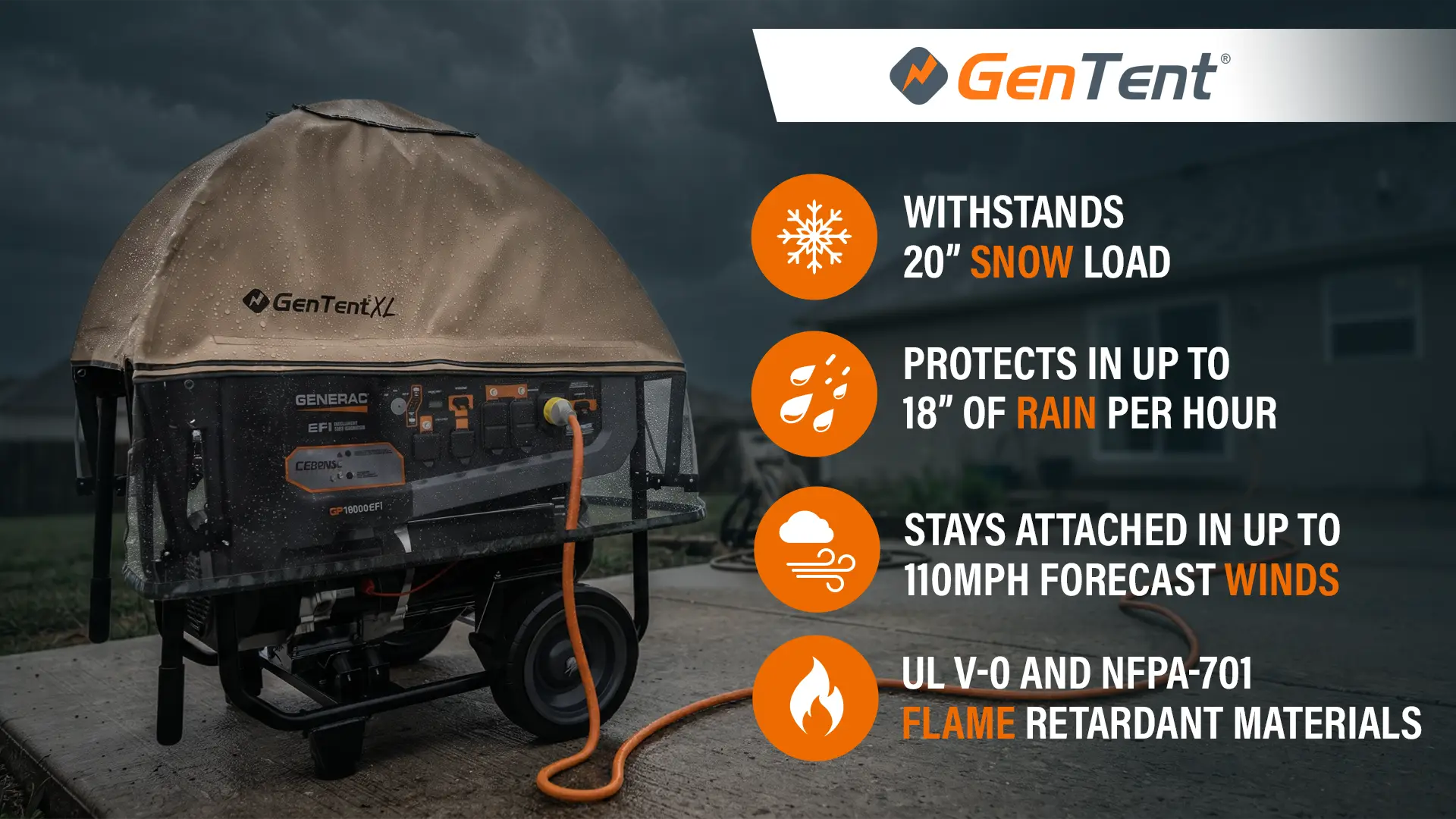
Current GenTent systems are NFPA-rated and built for serious weather, including up to 110 MPH forecast winds and 12 inches of rain per hour. For homeowners, campers, small businesses, emergency power users, and storm-prepared families, that means the generator can be better protected from weather while still staying outdoors, away from homes, tents, RVs, cabins, garages, doors, windows, and vents.
GenTent also connects directly to the larger safety standard conversation. As a safety product company, GenTent has provided a number of generator safety resources on www.gentent.com/safety which are free to use and co-brand. GenTent is also driving new technology into standards and safety bodies; to learn more visit www.gentent.com/ul2201a to learn more on why portable generator protective tents and running covers need a defined safety guidelines to supports safer consumer choices.
Before the next outage, use the GenTent Fit Finder to confirm the right GenTent system for your generator, install it in calm weather, choose the safe outdoor generator location, test the cord path, and make sure CO alarms are working.
Preparedness Is Not Just for Hurricanes
National Preparedness Month happens in September, but preparedness is not seasonal. Hurricanes, winter storms, thunderstorms, tornadoes, wildfires, floods, heat waves, and grid outages can all affect power, communication, transportation, and safety.
That is why a generator plan should not sit in a box until a storm is already on the radar. NOAA and National Weather Service hurricane planning resources encourage people to understand their risk, prepare an emergency kit, review family emergency plans, and know what watches and warnings mean before the storm arrives. That same thinking applies beyond hurricane season. Walk the property. Confirm the generator location. Check cords. Check fuel storage. Test alarms. Review the manual. Talk to family members about what the generator can power, what it cannot power, and what not to do.
A plan does not eliminate every risk. It limits the number of unsafe decisions people are forced to make when they are tired, rushed, cold, hot, stressed, or worried.
For generator owners, that plan should include safe distance, carbon monoxide protection, outdoor-rated cords, proper wiring, transfer switch planning, fire prevention, fuel safety, weather protection, and respect for the manufacturer’s instructions. GenTent helps make safer outdoor generator operation more practical by protecting your generator from severe weather while keeping it at a safe distance outside where it belongs.
Trust the experts and PREPARE this September
A Preparedness Checklist for Generator Owners
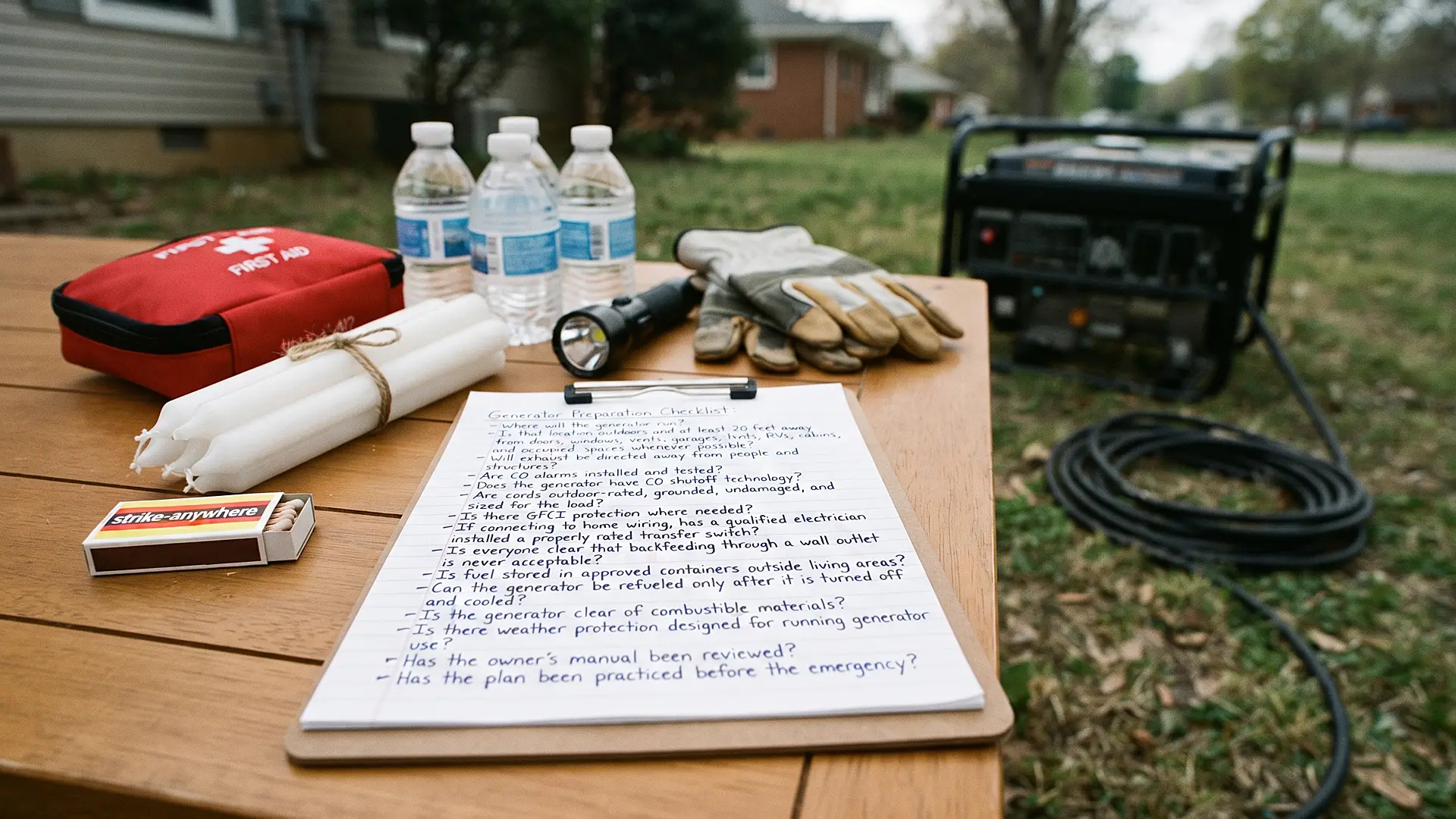
Before the next outage, ask these questions:
- Where will the generator run?
- Is that location outdoors and at least 20 feet away from doors, windows, vents, garages, tents, RVs, cabins, and occupied spaces whenever possible?
- Will exhaust be directed away from people and structures?
- Are CO alarms installed and tested?
- Does the generator have CO shutoff technology?
- Are cords outdoor-rated, grounded, undamaged, and sized for the load?
- Is there GFCI protection where needed?
- If connecting to home wiring, has a qualified electrician installed a properly rated transfer switch?
- Is everyone clear that backfeeding through a wall outlet is never acceptable?
- Is fuel stored in approved containers outside living areas?
- Can the generator be refueled only after it is turned off and cooled?
- Is the generator clear of combustible materials?
- Is there weather protection designed for running generator use?
- Has the owner’s manual been reviewed?
- Has the plan been practiced before the emergency?
Resource Summary
The resources below can help build a stronger preparedness plan. They do not replace your generator manual, local emergency guidance, or qualified electrical work, but they do provide reliable starting points for planning, education, and safer decision-making.
- Ready.gov National Preparedness Month and Ready.gov are strong starting points for family planning, emergency kits, communication plans, alerts, and hazard-specific preparedness.
- USFA Carbon Monoxide Poisoning Prevention and USFA 5 Steps to Portable Generator Safety help explain CO risks, generator placement, CO alarms, wet-area hazards, extension cords, and refueling safety.
- CPSC generator and CO resources, including the portable generator safety alert, winter weather safety tips, storm recovery guidance, and CO data reports, provide important consumer safety context around portable generator hazards, CO exposure, wet-weather use, alarms, fire, and post-storm recovery.
- ESFI Generator Safety is a helpful electrical safety resource for grounded cords, GFCI protection, transfer switches, proper loads, no backfeeding, dry operation, refueling when cool, and safe generator placement.
- NFPA Carbon Monoxide Safety, NFPA CO resources, and NFPA generator safety materials support planning around CO alarms, outdoor-only generator use, 20-foot placement, exhaust direction, outdoor-rated cords, fuel storage, and refueling safety.
- CDC Natural Disasters and Severe Weather, CDC Use a Generator Safely, and CDC Disaster Response Guidance connect generator safety to public health, disaster response, cleanup, food safety, power outage hazards, floodwater, heat, cold, and downed power lines.
- NOAA and National Weather Service safety resources, including hurricane planning guidance, Weather-Ready Nation resources, and NWS videos, help families understand severe weather risks before conditions deteriorate.
- GenTent Generator Safety Toolkit, GenTent UL 2201A Page, and the GenTent Fit Finder help connect public safety guidance to practical generator preparedness, fitment, weather protection, and safer outdoor generator operation.