
Unseen, Not Unstoppable: Why Public Awareness is the Key to Carbon Monoxide Safety
Posted by Brian Thomas on Nov 12th 2025
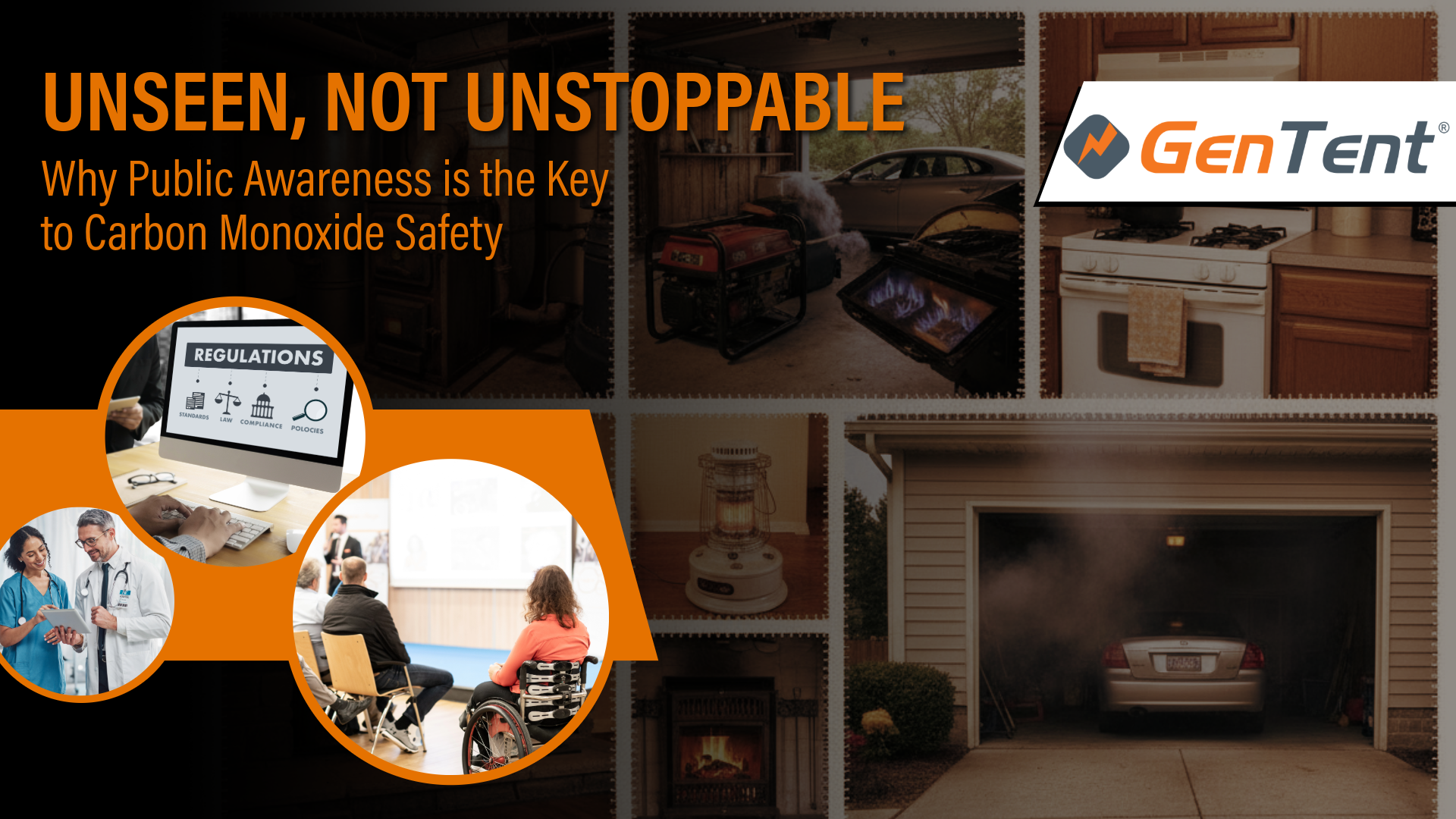
Every year, more than 100,000 Americans are rushed to emergency rooms—and over 400 lose their lives—because of something they can’t see, smell, or hear (Center for Disease Control and Prevention, Carbon Monoxide Poisoning Basics). Carbon monoxide (CO), often called the “silent killer,” is one of the leading causes of accidental poisoning in the United States. Yet despite its deadly nature, public awareness remains dangerously low, according to the National Carbon Monoxide Association.
November is recognized as Carbon Monoxide Awareness Month, a time when safety leaders, educators, and policymakers work to spotlight this invisible threat. Too often, families only learn about CO risks after tragedy strikes. But it does not have to be this way.
Immediate, proactive measures, especially public education and awareness, can save lives now, without waiting for new laws or disasters. At GenTent, a safety product company, we have seen firsthand how awareness spikes only after emergencies. That cycle is preventable. The latest U.S. State CO Risk Assessment from UL Standards & Engagement underscores why education is our most scalable, immediate tool to prevent CO poisoning; and how informed communities can take action before a crisis ever occurs.
The National CO Safety Gap: A Preventable Crisis
Carbon monoxide is odorless, invisible, and lethal. Each year it causes roughly 430 deaths in the U.S. and countless more injuries(UL Standards & Engagement , U.S. State CO Risk Assessment Report). The good news: CO poisoning is entirely preventable with proper precautions; namely, working CO detectors and safe behavior. The bad news: public awareness is alarmingly low. A new state-by-state Carbon Monoxide Risk Assessment by UL Standards & Engagement (ULSE) reveals widespread gaps in CO safety readiness, largely due to lack of awareness.
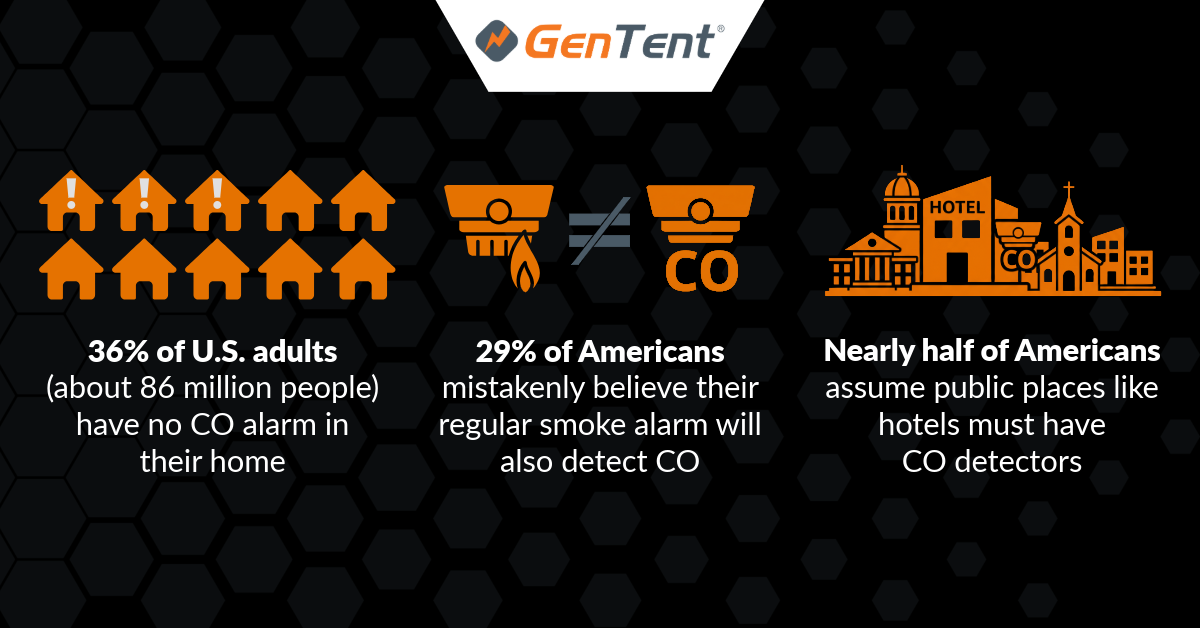
According to ULSE’s research, 36% of U.S. adults (about 86 million people) have no CO alarm in their home, leaving them defenseless against this silent threat (UL Standards & Engagement , U.S. State CO Risk Assessment Report). Even more concerning, nearly 3 in 10 Americans mistakenly believe their regular smoke alarm will also detect CO, and almost half assume public places like hotels must have CO detectors (which is often untrue) ( National Carbon Monoxide Association, U.S. State CO Risk Assessment Report: Key Insights & Actionable Recommendations).
This “awareness gap” is reflected starkly in ULSE’s state risk assessment. The ULSE report scored all fifty states (and D.C.) on three pillars of CO safety – health outcomes, code/regulatory standards, and public awareness & behavior – and found that public awareness and education are where the greatest national deficits exist. Many states have made progress enacting CO alarm laws or improving emergency response, but far too few have robust, ongoing public education campaigns. The result is a dangerous disconnect even where CO detectors are legally required; many residents do not install or maintain them, or use generators unsafely, simply because they do not realize the risk. ULSE’s findings underscore an urgent truth: knowledge and collaboration are as critical as legislation in preventing CO deaths.
New Hampshire: A Case Study in CO Safety Leadership
One state’s experience offers hope. New Hampshire emerged as a “CO Safety Leader” in ULSE’s 2025 assessment – not due to the strictest codes (in fact, its building code scores were middling), but thanks to high public awareness and improved health outcomes. New Hampshire scored about 84% on public awareness (well above the ~51% U.S. average), and its CO poisoning health outcomes outpaced many states (UL Standards & Engagement, CO Safety Leader, New Hampshire Report). This suggests that an informed public, even with moderate regulations, can achieve real safety gains.
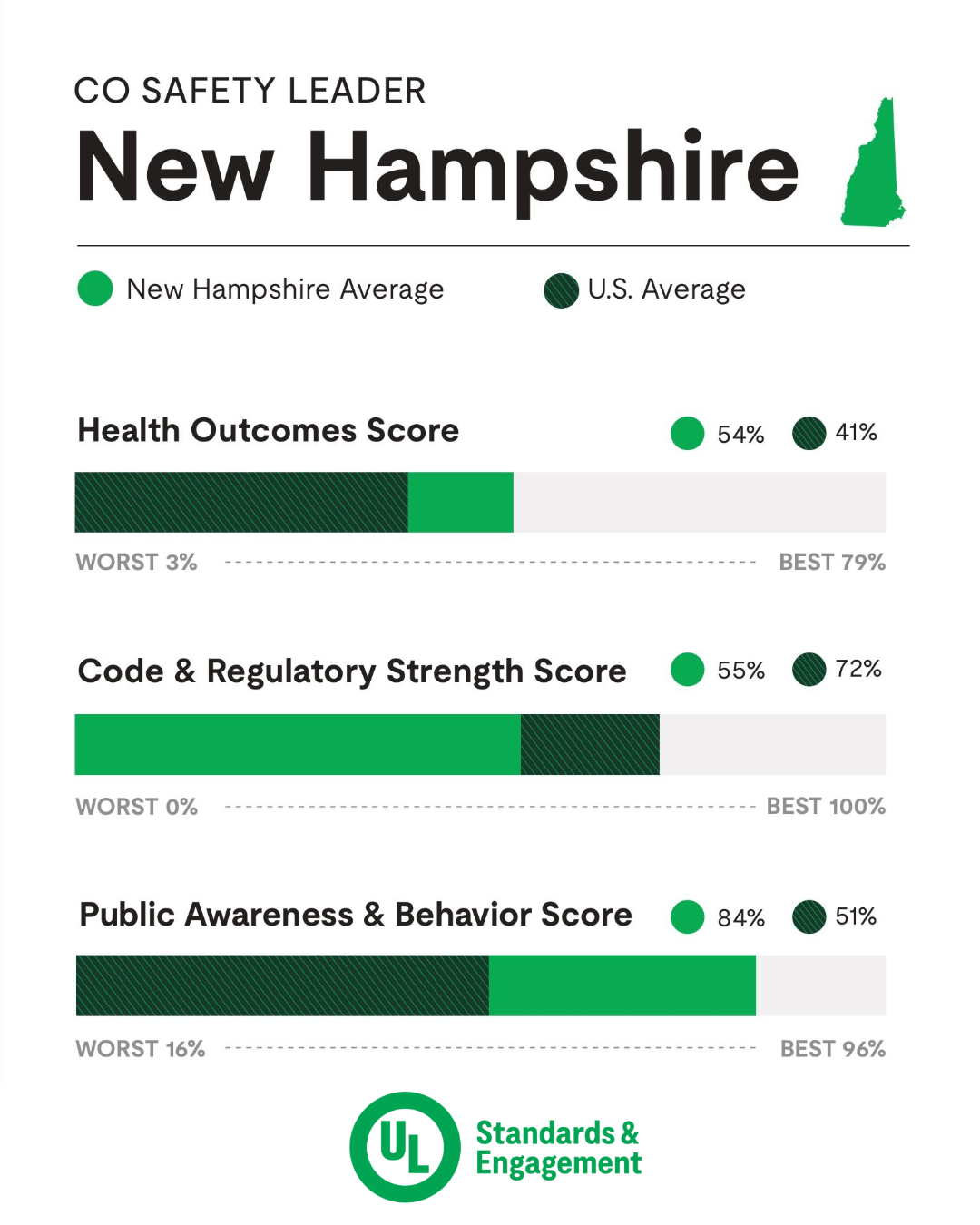
Source: U.S. State CO Risk Assessment Report, New Hampshire
Based on overall scores, ULSE ranked states in four tiers: CO Safety Champions, Leaders, Advocates, or Starters. States were lauded for positive actions in CO Safety and were given bespoke recommendations (e.g., mandate regular alarm maintenance, broaden stakeholder involvement, ensure alarm reliability, track CO incidents) to improve areas that were lagging.
What is New Hampshire doing right?
In short, meeting people where they are with education and alarms.
The NH State Fire Marshal’s Office launched an innovative school-based CO safety program in 2025, after a tragic holiday CO incident. (WMUR ABC 9, Deaths of family of 4 in Wakefield appear to be accidental).
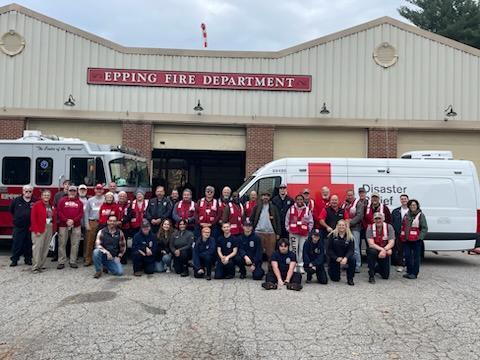
Backed by a federal grant (New Hampshire Division of Fire Safety, New Hampshire State Fire Marshal’s Office, State Fire Marshal’s Office Announces Carbon Monoxide Grant), the state purchased over 2,000 CO alarms to distribute free to schools and families, paired with an educational campaign (Valley News, NH to distribute free carbon monoxide alarms to schools). State safety officials are visiting 600+ schools to install CO detectors in classrooms and teach students and staff about CO risks. At the same time, the American Red Cross has joined forces with NH authorities to expand the reach of the Red Cross’s Home Fire Campaign. Marshal Toomey and his staff have partnered with Governor Kelly Ayotte to provide a carbon monoxide safety tool kit, and a series of Public Service Announcements which air on local tv, streaming and social placements. This initiative provides a straightforward and effective method for expanding public awareness of CO safety.
Source: New Hampshire Division of Fire Safety Carbon Monoxide Awareness Media Toolkit
GenTent also lends its expertise to inform better standards and policies. Our team participates in technical standards committees or working groups for the National Carbon Monoxide Awareness Association, UL Standards, Portable Generator Manufacturers’ Association, and through direct advocacy to regulators. In fact, our CEO, Mark Carpenter, has proposed multiple safety measures to the U.S. Consumer Product Safety Commission and industry groups to improve generator safety; submitting research-backed comments and even testified in federal hearings to support stronger CO protections (GenTent, GenTent® products and our business are dedicated to prioritizing consumer safety and advocating for it). GenTent staff have contributed to community-level initiatives, including alarm installations and public safety outreach in partnership with organizations such as the Red Cross and local safety coalitions – from helping install alarms during “Sound the Alarm” events to staffing generator safety info booths at regional preparedness fairs. By engaging both in community outreach and policy development, we aim to contribute meaningfully to a broader cultural shift in CO safety awareness.
Call to Action: Education First – Do Not Wait for the Next Tragedy
Every CO poisoning is preventable, and prevention is possible now. We do not need to wait years for new building codes to take effect or for another family to be lost to act. The most immediate, scalable solution is to educate and alert the public today. As ULSE’s report and real-world examples show, an informed community is a safer community. It’s time for policymakers, health departments, and emergency agencies across the country to collaborate and raise the alarm on carbon monoxide (UL Standards & Engagement , U.S. State CO Risk Assessment Report) – literally and figuratively – by making public awareness their top priority.
Here is how we can start right now:
- Launch Statewide CO Education Campaigns: Every state should run annual (if not year-round) CO safety campaigns. Leverage TV, radio, social media, and school programs to hammer home messages about installing CO alarms, recognizing CO symptoms, and using generators 20+ feet from homes. Focus especially during high-risk seasons (winter heating and storm season). Knowledge is power – even a simple PSA can prompt someone to buy an alarm or move their generator outside.
- Distribute CO Alarms to Vulnerable Communities: Encouragement must be paired with access. Follow the lead of states like NH in using grant funds or public-private sponsorships to provide free or low-cost CO detectors to households that need them. Pair distributions with on-site education. Every installed alarm is a potential life saved, especially in low-income, rural, or high-risk homes that might not otherwise have one.
- Partner with NGOs and Local Businesses: Build coalitions with groups that have community trust. Fire departments can team up with the Red Cross’s Home Fire/CO Campaign, hospitals can work with poison control centers, and emergency management can collaborate with companies (like GenTent) that have safety outreach programs. These partnerships extend your reach into neighborhoods and amplify the message with additional volunteers and resources. Public-private collaboration turns isolated efforts into coordinated movements.
- Empower Schools and First Responders: Integrate CO safety into school curricula and first responder training. Children can become safety ambassadors, bringing life-saving knowledge home (New Hampshire’s school initiative is a great example of this in action). Firefighters and EMTs can routinely educate residents on-scene about CO risks when responding to incidents or during smoke alarm installs. Making CO awareness part of routine fire safety outreach will normalize it and keep it on everyone’s radar.
Finally, leaders at all levels must treat CO poisoning prevention with the urgency it deserves. This means not only passing strong CO alarm laws and building codes but also funding and supporting the softer side of prevention: outreach, education, and community engagement. The ULSE assessment gave us a 50-state roadmap showing that the biggest gaps, and greatest opportunities, lie in public awareness. Public awareness is the common thread. By closing that gap, we can significantly reduce the more than 100,000 emergency room visits and 430 deaths caused by CO poisoning each year. Every household that installs a CO alarm, receives safety education, or learns proper generator use represents one fewer emergency call and one less preventable tragedy.
Recognizing this urgent need, GenTent is stepping up. But we cannot do it alone. We call on fellow manufacturers, elected officials, public health leaders, and citizens to join us in transforming awareness into action. Together we can harness the power of education and community action to prevent carbon monoxide poisoning rather than just respond to it. Through campaigns, partnerships, and urgency, we can prevent more lives from being lost to this silent killer. Carbon monoxide may be invisible, but with unified effort, we can make its dangers widely seen and understood. The solution is in our hands today: spread the word, empower the public, and never wait for tragedy to spark action. Lives depend on it, and lives will be saved by it.
Protect your home. Empower your community. Prevent the next tragedy.